§ Briefing, Friday, 18 September 2026

Constitutional reform, parliamentary oversight and bail under scrutiny

Constitutional reform proposals and a parliamentary recall request raise questions of process and oversight. Other developments concern bail, product registration enforcement and rideshare liability in arbitration.

Ghana · Legislation

Constituent Assembly proposed for constitutional review
Constituent Assembly proposed for constitutional review

The NPP has called for a Constituent Assembly to deliberate on proposed constitutional changes before a referendum. According to the party, the review proposals include amendments to 147 Articles and 59 new provisions, extending across the Judiciary and other constitutional institutions. The call is a political proposal, not an adopted amendment procedure or a change in law. Practitioners should distinguish the proposed consultative process from the constitutional requirements governing amendment of particular provisions.

The New Patriotic Party (NPP) has tasked the government to establish a Constituent Assembly to deliberate on the proposed changes to the 1992 Constitution before putting them to a referendum.

The party said the move was necessary to build a broad national consensus on the proposed reforms and resolve differences between the government and the Constitution Review Committee (CRC).

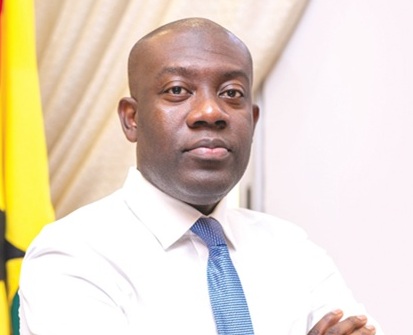
The Chairman of the NPP Policy Coordination Committee, Kojo Oppong Nkrumah, made the call at a press conference in Accra yesterday to state the party’s position on the government’s response to the CRC report.

He said the NPP supported some amendments to the Constitution but believed that the scale of the proposed changes required a broader process than an ordinary constitutional amendment.

Mr Oppong Nkrumah said the proposed Constituent Assembly should include representatives of political parties, organised labour, professional bodies, the National House of Chiefs, religious organisations, women’s groups, persons with disabilities, students and the youth, the private sector, civil society and the regions.

He said the Assembly would provide a platform for stakeholders to discuss and resolve the differences surrounding the proposed reforms.

“The sequence the NPP supports is consultation by the Committee, deliberation by a Constituent Assembly, ratification by the people,” he said.

Mr Oppong Nkrumah said the CRC proposed 206 changes, which comprised amendments to 147 of the Constitution’s 299 Articles and 59 new provisions.

He said the proposals covered major areas of governance, including the Executive, Parliament, the Judiciary, independent constitutional institutions and local government.

They amount to the overhaul of a Constitution and, in substance, the enactment of a new one,” he said.

He argued that such a major exercise should not be handled as routine parliamentary business, followed by a referendum.

Mr Oppong Nkrumah said the need for a broad-based deliberative process had become more important because of differences between the government and the CRC.

He said the government had adopted different positions from those of the independent committee on 100 of the 147 recommendations.

Among the issues, he said, were the proposed five-year presidential term, the size of Parliament, the appointment or election of certain MPs, whether MPs should serve as Ministers, the election of District Chief Executives and the independence and funding of oversight institutions.

He stressed that there was currently no platform for the government, opposition parties and other stakeholders to negotiate those differences.

Mr Oppong Nkrumah said Ghana’s previous constitutional processes demonstrated the importance of broad consultation and deliberation.

He cited the Constituent Assemblies that preceded the 1969 and 1979 Constitutions and the 260-member Consultative Assembly that worked on the 1992 Constitution.

He said the expert work that preceded those Constitutions was subjected to further deliberation by representative bodies before the final documents acquired a legal force.

The CRC, chaired by Professor Henry Kwasi Prempeh, was established by President John Dramani Mahama in January 2025 to review the 1992 Constitution.

It completed its consultations and submitted its final report to the President in December 2025.

The government has since issued its response to the recommendations and established an Implementation Committee to work on the reforms.

Mr Oppong Nkrumah said the NPP would not support taking the government’s preferred package of amendments to a referendum without a mechanism for building consensus.

He said the proposed Constituent Assembly should first deliberate on the disputed issues and produce a text that reflected a broad national agreement before it was submitted to Ghanaians.

“The Constitution is not the property of the NDC or the NPP. It belongs to the people of Ghana,” he said.

He urged the government to establish the Assembly and provide what he described as “the table” for stakeholders to discuss and settle the outstanding issues before asking Ghanaians to vote.

Connect With Us : 0242202447 | 0551484843 | 0266361755 | 059 199 7513 |
Read at Graphic Online →
Ghana · Procedure

Minority invokes constitutional procedure for parliamentary recall

Minority invokes constitutional procedure for parliamentary recall

The Minority has submitted a request for Parliament's recall, invoking Article 112(3) of the Constitution and Order 53 of Parliament's Standing Orders. It says it has secured the required 15 per cent support and seeks scrutiny of narcotics seizures linked to Ghana, including port clearance procedures and cooperation with foreign authorities. The report establishes a request, not confirmation that an extraordinary sitting has been convened or an inquiry constituted. Any resulting proceedings could be significant for counsel advising the public agencies and commercial entities whose conduct comes under scrutiny.

The Minority in Parliament has formally requested the recall of Parliament to investigate a series of major narcotics seizures involving consignments linked to Ghana.

The request, signed by the First Deputy Minority Whip and Tolon MP, Habib Iddrisu, invokes Article 112(3) of the 1992 Constitution and Order 53 of Parliament’s Standing Orders.

The Minority says it has secured the required 15 per cent of Members of Parliament to trigger an extraordinary sitting.

At the centre of the request is the reported seizure of approximately 3.9 tonnes of cocaine at the Port of Dunkirk in France on September 10, 2026.

According to the Minority, the cocaine was concealed in a container of plastic waste that had departed Ghana.

The caucus says the seizure raises serious questions about Ghana’s port security, customs controls, intelligence gathering and narcotics enforcement systems.

It wants Parliament to establish how the container was processed, inspected, cleared and exported from Ghana.

The Minority is also demanding answers on the companies and institutions involved, the progress of investigations and arrests, and the level of cooperation between Ghanaian authorities and their French and other international counterparts.

It calls on officials and institutions, including the Ministers responsible for Interior, Transport and National Security, NACOC, the Ghana Ports and Harbours Authority, the Ghana Revenue Authority, the Ghana Immigration Service, and the National Intelligence Bureau, to account to Parliament.

The caucus has also cited several other drug-related incidents since 2025.

These include the seizure of more than 3.3 tonnes of cocaine at Pedu Junction in March 2025, another consignment of about 120 slabs of cocaine, and the seizure of 866 parcels of suspected cocaine at a warehouse within the Tema Harbour enclave in August 2026.

The Minority also cited the seizure of 320kg of methamphetamine by Australian customs authorities in June 2026 from a charcoal consignment traced to Ghana.

It further referenced the French seizure, putting the value of high-profile narcotics seizures linked to Ghana under the current administration at more than US$1 billion in less than two years.

The caucus says the scale of the incidents requires Parliament to examine whether Ghana is being used as a transit or operational point for international narcotics trafficking.

It also raised concerns about the progress of investigations into earlier seizures, particularly the Pedu Junction case.

According to the Minority, more than a year after that seizure, only the driver, a housemaid and a small number of peripheral suspects have been arraigned and remain on bail, while the financiers and principal traffickers remain unidentified.

The caucus says the matters “cannot reasonably await the ordinary resumption of Parliament.”

It stressed that the proposed parliamentary inquiry would not seek to interfere with ongoing criminal investigations or prejudge anyone.

Rather, it says the recall would allow Parliament to exercise its constitutional responsibility for oversight, accountability, and the protection of the national interest.

The Minority has therefore asked the Speaker to summon Parliament within the constitutionally prescribed period to consider the narcotics-related concerns and their wider implications for national security and Ghana’s international standing.

Read at MyJoyOnline →
Ghana · Procedure

Nurses' association challenges continued detention of member

Nurses' association challenges continued detention of member

The Ghana Registered Nurses and Midwives Association is seeking bail for Salomey Awity Baffoe, citing her permanent employment and disputing any flight risk. The report raises an access to justice issue concerning continued detention, but does not supply the charge sheet or the court's reasons for refusing bail. The association's description of the alleged offence as a misdemeanour should not be treated as an established legal classification. For practitioners, the material documents remain the remand order, the charges and the evidence relevant to a renewed bail application.

The Ghana Registered Nurses and Midwives Association (GRNMA) is calling for bail for senior nursing officer Salomey Awity Baffoe, arguing that there is no justification for keeping her in custody for another two weeks.

Assistant Public Relations Officer of the GRNMA, Philemon Agyapong, said the Association is particularly concerned about the continued detention of its member, whom he described as a senior nursing officer stationed in the Techiman area.

Speaking on Asempa FM’s Ekosii Sen , Mr Agyapong said Salomey has a permanent place of work and is therefore not a flight risk.

“We pray that our member is granted bail because this cannot be an issue that should warrant her being incarcerated for another two weeks,” he said.

He questioned the basis for denying her bail, stressing that her employment and permanent workplace make it possible for the authorities to locate her whenever necessary.

“She is not a flight risk to deny her bail. She has a permanent place of work that she can be tracked,” he added.

According to him, the Association was surprised by the nature of the allegations against the nurse, particularly the claims that she was connected to an attempt to overthrow the government.

“We were even shocked to hear that a nurse could overthrow a government, but we will respect the law.”

Mr Agyapong said although the GRNMA cannot determine Salomey’s guilt or innocence, it believes she should be treated fairly under the law.

He argued that, in the Association’s view, the allegations do not warrant prolonged incarceration.

“I know that there are laws in this country, but we expect a fair trial. We believe in the judicial system. We don’t think this issue is a first- or second-degree felony. It is a misdemeanour,” he added.

The GRNMA official said it was particularly worrying that Salomey remained in custody despite the police having commenced investigations.

“They have commenced investigation, and now it turns out that the person who has been declared wanted is not even in Ghana. She should be given bail because even the worst criminals are sometimes given bail,” he added.

Mr Agyapong said the Association has visited the facility where Salomey is being held and is also conducting its own internal assessment of the matter, including examining her conduct and professional record.

“Our executives have visited the facility to ask about her attitude towards work and all that, so we’re also doing our own internal investigation.”

He stressed that the GRNMA would continue to stand by its member while respecting the judicial process.

“The association is a law-abiding institution, and we went to court to listen to the arguments made by the lawyer, so we don’t think she deserved to be detained.”

Mr Agyapong said the Association would continue to seek Salomey’s release while allowing the relevant institutions to handle the case according to law.

Read at MyJoyOnline →
Ghana · Regulation

FDA seizes unregistered diapers in Bono markets

FDA seizes unregistered diapers in Bono markets

The Bono Regional FDA reports seizing more than 57,000 unregistered baby diapers from five shops during a market surveillance exercise supported by police. The authority says the exercise targets unregistered and other non-compliant products and includes education on registration, packaging and storage. This is an enforcement action, not a reported finding that the seized diapers were unsafe. Counsel advising importers and retailers should check applicable registration requirements, compliance records and the procedures governing seizure and subsequent disposal.

The Bono Regional Office of the Food and Drugs Authority (FDA) has seized over 57,000 pieces of unregistered baby diapers in an exercise conducted at some major markets in the region.

The authority carried out the three-day exercise at some major markets in Sunyani, Berekum and Dormaa Municipalities of the region.

According to a Regulatory Officer at the Bono Regional Office of the FDA, Charles Opoku Gyamfi, the unregistered baby diapers were seized from five shops and packed in bales.

In an interview with the Ghana News Agency (GNA), on the sidelines of the exercise at Berekum, he said he had commenced an enforcement exercise to rid the market of unregistered, expired, fake and unwholesome cosmetic products and other consumables.

He explained that: “The exercise is a market surveillance and a public health safety exercise to ensure that uncertified products are not sold in the local Ghanaian markets”.

Mr Gyamfi said a 10-member FDA enforcement team, with support from the police, embarked on the exercise, saying that the Authority had also intensified public sensitization alongside to ensure that dealers and traders registered their products.

The public sensitization also aimed at ensuring that the dealers and traders properly packaged and stored their products under good and hygienic conditions too.

The Bono Regional Head of the FDA, Madam Akua Amponsaa Owusu, noted that unregistered products sold in the markets threatened public health safety.

“The FDA can’t guarantee the safety and health of unregistered diapers”, she stated, worrying about the influx of unregistered baby diapers and related products in the country.

Madam Owusu noted that because of their affordability and cheaper prices, the public often preferred and patronized unregistered baby diapers, warning that those who bought those products did so at their own risk.

She advised the public to always ensure that they check the FDA registration numbers and label information before buying baby diapers and packaged products.

Madam Owusu called on retailers and shop owners who had unregistered baby diapers and unwholesome products to the Authority, warning that culprits would be prosecuted accordingly.

Read at MyJoyOnline →
United States, California · Judgment

California arbitration awards US$40 million against Uber

California arbitration awards US$40 million against Uber

A retired judge acting as arbitrator reportedly ordered Uber to pay US$40 million to the parents of a passenger killed after its driver allegedly required her to leave the vehicle on a highway. Uber had argued that the driver's independent-contractor status excluded the company's responsibility. The outcome is an arbitral award, not a court judgment establishing binding precedent, and the supplied report does not set out its full legal reasoning. It offers a comparative point for Ghanaian practitioners advising platforms on passenger safety, contractor arrangements and dispute-resolution clauses.

Uber has been ordered to pay $40m (£29m) to the family of a 23-year-old woman who was fatally struck on a California highway after the rideshare company's driver allegedly pulled over and ordered her out of the car.

Emily Normandin-Parker had booked an Uber for home with a friend on 12 August 2023, before her friend became sick and vomited in the car, court documents show.

Her parents said the driver pulled over to the side of the highway and forced the women, who were intoxicated, out of the car, after which Normandin-Parker was hit and killed by another vehicle.

Uber had argued that the driver was an independent contractor, and the company was not responsible for his actions.

"Emily did everything Uber tells riders to do - she made the responsible choice not to drive and we trusted Uber to get her home safely," her parents said in a statement about their daughter, a graduate of the University of California, Los Angeles. "That trust cost our daughter her life."

Judge Richard Stone ordered the rideshare company to pay the money to Normandin-Parker's parents after a five-day arbitration process, according to the law firm Panish, Shea, Ravipudi, which represented the family.

Arbitration is an alternative way to resolve disputes outside of court with a qualified arbitrator, in this case a retired judge.

Lawyers representing the family said that after leaving the women on the highway, the driver, Vu Tran, did not call for help for them. He instead pulled off to call Uber and demand they charge Normandin-Parker a cleaning fee, the lawyers said.

Tran showed "far more worry for his new car than he did for his passengers", Judge Stone said, adding that he could have taken the exit and dropped the women off at a safe location.

Uber said it believed the arbitrator was wrong in holding the company legally responsible for the event.

"We have continued to strengthen our approach to safety over the years, through new technology, policies and safeguards informed by safety experts, including additional guidance to drivers about avoiding drop-offs in unsafe locations," the company said in a statement.

The law firm representing the family said Uber had initially proposed a settlement that would give the parents $10m and require them not to speak about the incident, which they declined.

Read at MyJoyOnline →