§ Briefing, Saturday, 26 September 2026

Court access, bail and regulatory compliance lead today's briefing

The GBA has challenged an attempted arrest of counsel at court, while a reported bail refusal raises liberty concerns. Other developments concern utility tariffs, gold exports, employment obligations and proposed demolitions.

Ghana · Profession

GBA raises concerns over attempted arrest of counsel at court
GBA raises concerns over attempted arrest of counsel at court

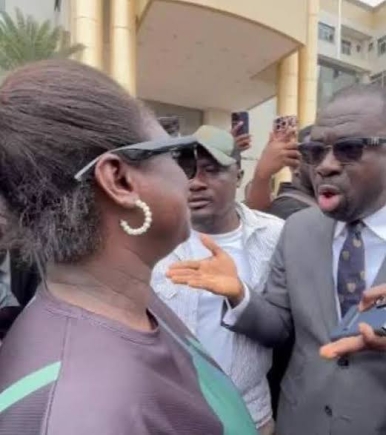
The Ghana Bar Association has expressed concern over EOCO's attempted arrest of Nana Agyei Baffour Awuah at the Accra High Court Complex while he was representing a client. EOCO says the action followed his alleged failure to honour two investigative invitations; the GBA also noted an allegation that another lawyer was assaulted. The association stressed that enforcement must respect counsel's professional independence and avoid disrupting judicial operations. Its statement is an institutional intervention, not a judicial determination of the arrest's legality or any immunity.

The Ghana Bar Association (GBA) has raised a concern over last Wednesday’s attempt by the Economic and Organised Crime Office (EOCO) to arrest Nana Agyei Baffour Awuah, a lawyer who is also the Manhyia South Member of Parliament (MP), while he was at the Accra High Court Complex representing a client as a lawyer.

On Wednesday, September 23, 2026, EOCO operatives attempted to take Baffour Awuah into custody on the court premises right after he stepped out of a courtroom. He was at the premises acting as defense counsel for a client in the high-profile "Ghana Jollof" case.

Baffour Awuah demanded an arrest warrant and refused to follow the operatives. The situation degenerated into a physical confrontation before he managed to drive away.

EOCO stated that the enforcement action was initiated because Baffour Awuah had allegedly failed to honour two formal invitations sent to him earlier in the year to assist with an ongoing investigation.

The GBA’s statement dated September 24, 2026, jointly signed by its National President, Efua Ghartey, and National Secretary, Kwaku Gyau Baffour, highlighted several crucial points regarding the administration of justice

The association said it had also taken note of videos of the attempted arrest in which another lawyer, Enoch Anwere Afoakwa, was seen complaining of being assaulted by the EOCO personnel who attempted to effect the arrest.

The association stressed that while no individual is above the law, law enforcement must respect the professional independence of legal practitioners, especially when they are actively representing clients in a court of law.

Executing arrests within court premises disrupts judicial operations and undermines the authority and dignity of the courts.

The GBA has admonished state authorities to discharge their duties responsibly, fairly, and strictly within the framework of the 1992 Constitution.

The GBA said while no individual was above the law, investigations or enforcement actions involving members of the legal profession, especially when they were representing clients, had to be conducted in accordance with the Constitution, applicable legal procedures and respect for professional independence.

The association said lawyers played a role in the administration of justice and the protection of the rights of citizens.

It said any action that appeared to interfere with lawyers’ ability to discharge their professional duties, particularly through arbitrary or irregular measures, risked undermining public confidence in the justice system and the rule of law.

The GBA recalled remarks made by its President at the 2025 annual conference in Wa, where she had said lawyers should be at liberty to defend clients of their choice without being heckled.

“The Bar must never waiver in its role as the voice of the voiceless. Unfortunately, recent incidents affecting lawyers in the performance of their duties, have left much to be desired,” the statement read.

“Lawyers should be at liberty to defend clients of their choice without being heckled,” it added.

The GBA also recalled an incident involving a former Vice-President of the Bar, Justice Minka Premo, and his female associate, who had gone to the Bureau of National Investigations (BNI) to defend a client.

It said the two lawyers had been arrested and detained overnight, while the female lawyer, who was a nursing mother, had been separated from her baby and was initially unable to feed the child.

It said the incident had raised questions about the treatment of lawyers who were performing their professional duties.

“Recently, a former Vice President of the Bar, Justice Minka Premo and his young female associate, who had gone to the defence of a client at BNI, were subjected to such regrettable treatment,” it read.

The GBA called on EOCO and other relevant state institutions and agencies to ensure that their actions were consistent with due process, fairness and respect for the rights of all persons involved.

“The rule of law demands not only that justice be done, but that it be seen to be done,” the association said.

It said the independence of the legal profession was a cornerstone of every democratic society and had to be protected at all times.

Connect With Us : 0242202447 | 0551484843 | 0266361755 | 059 199 7513 |

Read at Graphic Online →
Ghana · Procedure

High Court reportedly refuses bail in Baffoe case

High Court reportedly refuses bail in Baffoe case

The report states that the High Court in Accra rejected Salomey Awiti Baffoe's bail application on September 24, following her remand by the Adentan Circuit Court on an abetment charge. A political representative has challenged her continued detention, disputing concerns about interference with electronic evidence after police reportedly seized her phones. Counsel has reportedly petitioned the Chief Justice to facilitate a Court of Appeal sitting on her liberty. Practitioners should obtain the ruling and relevant filings before treating the public account as establishing the court's reasoning or the procedural route for further relief.

The Eastern Regional Women’s Organiser of the New Patriotic Party (NPP), Regina Bempong, is calling on the Attorney-General and the Police Criminal Investigations Department to secure bail for Senior Nursing Officer, Salomey Awiti Baffoe, who is being held in connection with the “Ghana Jollof” case.

According to her, Mrs Baffoe’s continued detention is unjustified, particularly as she is a mother of three and faces a misdemeanor charge.

Mr Baffoe was remanded by the Adentan Circuit Court on September 17, 2026, on a charge of abetment. Her bail application was rejected by the High Court in Accra on Thursday, September 24.

In a statement, Madam Bempong argued that the concerns over possible interference with electronic evidence should not be a basis for keeping Madam Baffour in custody.

She said the police have already seized her two mobile phones and, according to the police, accessed them.

Madam Bempong also maintained that the alleged offence is bailable and that Mrs Baffoe is presumed innocent until proven guilty.

She is therefore urging the Attorney-General and the Police CID to facilitate her release on reasonable conditions while investigations continue.

The Eastern Regional NPP Women’s Organiser is also appealing to the Chief Justice to urgently consider a petition filed by Madam Baffoe's lawyer, Nana Agyei Baffour Awuah, seeking to have the Court of Appeal sit on the matter concerning her liberty.

Madam Bempong has further called on women’s groups, the Ghana Registered Nurses and Midwives Association (GRNMA), FIDA and civil society organisations to speak up on the case.

Read at MyJoyOnline →
Ghana · Regulation

PURC maintains electricity and water tariffs for fourth quarter

PURC maintains electricity and water tariffs for fourth quarter

The Public Utilities Regulatory Commission has announced that third-quarter electricity and water tariffs will remain unchanged for the fourth quarter of 2026, effective October 1. The decision follows its quarterly review of exchange rates, inflation, gas costs and the generation mix. Counsel advising utilities and commercial consumers should use the official PURC decision and schedules to confirm applicable billing rates.

The Public Utilities Regulatory Commission (PURC) has maintained the charges for electricity and water tariffs for the fourth quarter of 2026, with the existing third-quarter rates remaining unchanged.

The unchanged tariffs will take effect from October 1, 2026, following the commission’s quarterly review of utility tariffs to account for developments in key economic and operational factors.

The review considered the Ghana cedi-US dollar exchange rate, inflation, the cost of natural gas and the electricity generation mix, with the cedi depreciating by 3.04 per cent while the weighted average cost of gas declined by 1.67 per cent.

The approval was announced yesterday in a statement issued and signed by the Executive Secretary of PURC, Dr Shafic Suleman.

"PURC wishes to inform consumers of electricity and water that the existing electricity and water tariffs of the third quarter have not changed, but remain the same in the fourth quarter," it said.

The PURC said the average annual inflation rate applied for the fourth quarter was 4.97 per cent, representing an increase of 44.89 per cent from the 3.43 per cent recorded in the previous quarter.

It also applied a weighted average Ghana cedi-US dollar exchange rate of GH¢11.5646 to $7.8379 per MMBtu, representing a 1.67 per cent decline from $7.9708 per MMBtu in the third quarter.

It said the projected hydro generation mix was expected to increase from 20.90 per cent to 24.25 per cent, while thermal generation would decline from 79.10 per cent to 75.75 per cent.

The PURC said the combined impact of the hydro-thermal generation mix, exchange rate, inflation and natural gas prices resulted in its decision to maintain electricity tariffs at their existing levels.

It similarly maintained water tariffs at the third-quarter levels for the fourth quarter of 2026.

The commission said the quarterly tariff reviews were intended to account for changes in operational parameters beyond the control of utility service providers while ensuring their financial viability.

It added that it would continue to monitor the operations of regulated service providers and hold them accountable to regulatory standards and benchmarks to ensure value for money and improved quality of service delivery.

The PURC said the quarterly reviews were also intended to maintain the real value of existing tariffs and enable utility providers to remain financially viable.

It said the reviews took into account the impact of tariff levels on the wellbeing of consumers while ensuring that service providers had the resources to deliver reliable services.

The commission said it appreciated stakeholders’ support for the implementation of the quarterly tariff reviews, which helped address changes in operational parameters beyond the control of utility providers. It further urged regulated service providers to adhere to its regulatory standards and benchmarks to ensure value for money and improved quality of service delivery.

Connect With Us : 0242202447 | 0551484843 | 0266361755 | 059 199 7513 |

Read at Graphic Online →
Ghana · Regulation

GoldBod domestic refining requirement reported for export aggregators

GoldBod domestic refining requirement reported for export aggregators

An opinion article reports that, from September 1, GoldBod requires Self-Financing Aggregators to refine gold doré domestically before export and will not clear unrefined doré. It places the requirement within the framework of the Ghana Gold Board Act, 2025 (Act 1140). The reported restriction has direct implications for export contracts, refining arrangements and delivery obligations. Practitioners should verify the operative GoldBod directive, its scope and any transitional provisions rather than rely on the commentary alone.

Ghana’s growing dependence on gold export earnings has reignited a crucial debate on economic resilience.

Economists, notably Prof. Peter Quartey, have rightly highlighted the structural risks of over-reliance on a single commodity: when one resource dominates foreign exchange receipts, international price swings threaten macroeconomic stability.

However, focusing solely on export concentration misses the broader strategic shift underway.

The fundamental question for Ghana is no longer just how much gold it exports, but how much economic value is retained domestically, how effectively receipts build national reserves, and how robustly market risks are managed.

This is where the transformation of Ghana’s gold architecture becomes central to the economic agenda.

The establishment of the Ghana Gold Board (GoldBod) under the Ghana Gold Board Act, 2025 (Act 1140) marks a deliberate transition from a fragmented trading ecosystem to a coordinated national framework.

GoldBod’s statutory mandate targets the core weaknesses of the traditional model: purchasing, assaying, domestic refining, supply chain traceability, combating smuggling, and supporting Bank of Ghana (BoG) reserve accumulation.

A cornerstone of this strategy is mandatory local refining. From September 1, 2026, GoldBod requires Self-Financing Aggregators to refine gold doré domestically prior to export. Unrefined doré will no longer receive export clearance.

The economic rationale is simple: value creation must not stop at extraction. Domestic refining opens the door to localized assaying, minting, commercial jewellery fabrication, supply chain logistics, and financial engineering. By licensing local refineries and artisanal fabricators, Ghana is formalizing a downstream ecosystem that keeps capital and high-value jobs at home.

Gold is more than an export commodity; it is Ghana’s primary hard-currency anchor. Bank of Ghana data underscores this momentum: gold export receipts doubled from US10.31 billion in 2024 to US20.98 billion in 2025, lifting total merchandise exports to US$31.11 billion.

-International reserves expanding to 5.7 months of import cover.

-A 40.7% appreciation of the cedi against the US dollar over the same period.

While these gains do not neutralize global price volatility, they illustrate how structured gold proceeds can transform temporary commodity gains into durable external buffers. The strategy actively converts gold receipts into balance-sheet strength rather than allowing them to vanish as uncaptured export proceeds.

Maximizing value requires plugging systemic leakages. Unrecorded exports and smuggling severely undermine economic returns. GoldBod’s supply-chain traceability program aligns domestic sourcing with international OECD standards, ensuring ethical origin, transparency, and tax capture across both artisanal and large-scale sectors.

Furthermore, GoldBod is integrating active risk-management frameworks. Combining physical reserve accumulation at the central bank with commercial hedging and trading mechanisms helps buffer the wider economy against sudden downward price corrections in the global bullion market.

Prudent management must account for market downturns. Resilience depends not on avoiding commodities altogether, but on controlling the value chain, formalizing production, retaining secondary economic benefits, and fortifying external reserves.

Ghana’s gold sector is moving past raw extraction. As GoldBod’s reforms take hold, the policy debate should evolve. The central question is no longer simply "How much of Ghana’s export basket is gold?"

The true test is: What is Ghana doing with its gold, how much value remains within its borders, and how effectively is that resource being built into lasting economic strength?

Read at MyJoyOnline →
Ghana · Procedure

Tumu road clearance ultimatum raises demolition procedure questions

Tumu road clearance ultimatum raises demolition procedure questions

Tumu landlords and traditional authorities have announced a two-week deadline for occupants of the Tumu-Leo road corridor to vacate ahead of road works, with demolition said to follow. The report identifies houses, kiosks and institutional structures as potentially affected, but does not establish the statutory authority or formal notices supporting clearance. Advisers should examine the road reservation, affected interests, notice requirements and any available compensation or challenge procedures. The description of occupants as encroachers should not substitute for verification of their legal position.

Search Watch live Home News Politics Business Sports Entertainment Opinion Videos More Tumu landlords give encroachers 2-week ultimatum to vacate ahead of Tumu-Leo road construction The directive was issued during an engagement involving the Tumu landlords, traditional authorities, affected residents and the Member of Parliament for Sissala East, Issah Mohammed Bataglia.

Copy link Add 3News as your preferred source on Google Preferred source Article tools Ask AI Listen to this article AI narration Playback position 0:00 4:06 10 10 Playback speed 1× Residents with structures along the Tumu-Leo road corridor in the Sissala East Municipality of the Upper West Region have been given a two-week ultimatum to vacate the area to pave the way for the expansion and construction of inner roads in Tumu, particularly the Tumu-Leo road.

The directive was issued during an engagement involving the Tumu landlords, traditional authorities, affected residents and the Member of Parliament for Sissala East, Issah Mohammed Bataglia.

The exercise is expected to particularly affect owners of houses, kiosks, Ghana Commercial Bank PLC, VRA, containers and other structures located within the road reservation.

Speaking on behalf of the Tumu Landlord, Jantina Baba Tommie Kanton, his secretary, Godfred Baveru Kanton, said the road reservation had existed for more than 80 years and had historically been recognised as an international route.

He therefore urged all persons who had encroached on the road corridor to begin preparations to relocate.

“Those of us who have encroached on the road, he wants them to go and prepare themselves and move so that the road construction will take place. Within two weeks, they will start the demolition,” Baveru Kanton emphasised.

He particularly appealed to owners of kiosks and container shops to start dismantling their structures and salvage materials that could be reused before the demolition exercise begins.

The traditional authority also cautioned local political actors against interfering with the process, stressing that the road project was important to the future development of Tumu.

The Member of Parliament for Sissala East, Issah Mohammed Bataglia, said the engagement was intended to foster cooperation between the affected residents and stakeholders to ensure the road project was successfully implemented.

He acknowledged that the demolition exercise could be painful for some residents but said the broader economic benefits of opening up the area should also be considered.

“Even though painful, we see the vision is bigger than just the individual pain,” Bataglia stated.

According to him, improved road connectivity, particularly towards the Burkina Faso border, could unlock new opportunities in trade, transportation and employment.

Adding that the project could also create opportunities for young people to venture into transportation and other businesses.

“If we open up the road towards Burkina Faso, it will open the cargo traffic towards that area, and that will give the young people some jobs to do,” he said.

Issah Bataglia said he would engage the relevant authorities and other stakeholders on measures to minimise the impact of the demolition on affected residents.

He stressed that the development agenda should not worsen the circumstances of people already facing economic challenges.

“The actual essence of the purpose of the President is not to impoverish the already suffering people; it is to make their life better,” he said.

He therefore expressed confidence that interventions would be considered to lessen the burden on affected residents.

The Tumu landlords and traditional authorities have expressed strong support for the road development programme, describing it as an important intervention to open up the Sissala area and stimulate economic activity.

The traditional authority has also appealed to government and the Roads Ministry to consider its preferred contractor, Mawums Construction Limited, for the Tumu road works, citing its previous capacity to execute road projects in the area.

The development forms part of broader efforts to improve road connectivity in the Sissala East Municipality and strengthen links towards the Burkina Faso border.

For affected residents along the Tumu-Leo stretch, however, the two-week deadline means they must now make urgent decisions about their properties and businesses as preparations begin for the road works

#5 Presidential Drive, Adesa We, Kanda, Greater Accra. Ghana

Read at 3News →
Ghana · Procedure

Teacher dispute centres on collective agreement obligations

Teacher dispute centres on collective agreement obligations

The Minority has urged government action to avert an indefinite teachers' strike over outstanding conditions of service. Its statement alleges failures concerning promotion placement and deprived-area allowances, invokes section 17(2) of the 2024 Collective Agreement, and identifies delays in negotiating a replacement agreement. The legal significance lies in the enforcement of agreed employment terms and the procedures governing industrial action. Labour practitioners should verify the agreement, union notices and any dispute-resolution steps before assessing entitlement or the lawfulness of a strike.

The Minority in Parliament has called on the government to urgently resolve outstanding concerns raised by the country's teacher unions to avert an indefinite industrial action.

According to the Minority, the planned strike by the Ghana National Association of Teachers (GNAT), the National Association of Graduate Teachers (NAGRAT) and the Pre-Tertiary Teachers Association of Ghana (PRETAG) was linked to unresolved issues concerning teachers' conditions of service.

This was contained in a statement signed by the Member of Parliament for Suhum and Deputy Ranking Member of the Employment, Labour Relations and Pensions Committee, Frank Asiedu Bekoe, on Friday, September 25, 2026.

The Minority said the delays in negotiating a new Collective Agreement, the failure to automatically place teachers who have been promoted after successfully passing aptitude tests, and the non-payment of the Deprived Area Allowance are provided for under Section 17(2) of the 2024 Collective Agreement for Teaching Staff within the Ghana Education Service.

The Caucus said the issues raised by the unions were not new demands but agreed conditions of service which, it alleged, had not been implemented by the government through the Fair Wages and Salaries Commission (FWSC) and the Controller and Accountant-General's Department (CAGD).

It further linked the dispute to what it described as poor learning outcomes, citing the performance recorded in the 2026 Basic Education Certificate Examination (BECE).

The Minority argued that the concerns affecting teachers could have implications for the quality of education, saying, “when you frustrate the teacher, you fail the child.”

It said the reported BECE performance should prompt the government to pay greater attention to the welfare and working conditions of teachers.

The Caucus also criticised what it described as the government's failure to fully implement agreements reached with the teacher unions, including directives relating to the Deprived Area Allowance.

It therefore called on the government to immediately engage GNAT, NAGRAT and PRETAG and conclude negotiations on the new Collective Agreement.

The Minority further demanded that the Controller and Accountant-General's Department place all promoted teachers on their new grades and pay their outstanding arrears from January 2026.

It also called for the immediate implementation of the 20 per cent Deprived Area Allowance for teachers working in hard-to-reach communities.

Mr Asiedu Bekoe said the government must prioritise the concerns of teachers and the broader needs of the education sector.

“Government must prioritise the classroom over distractions. If we lose our teachers, we lose our nation,” he said.

The teacher unions have announced an indefinite industrial action over the unresolved issues, putting further pressure on the government to engage the unions and address their concerns.

Read at MyJoyOnline →
Ghana · Legislation

ICAG seeks stronger safeguards for public oversight institutions

ICAG seeks stronger safeguards for public oversight institutions

The Institute of Chartered Accountants, Ghana has called for stronger constitutional protection for the Auditor-General, Internal Audit Agency and State Interests and Governance Authority. At a lecture on constitutional review, its representative argued that existing arrangements leave oversight institutions exposed to political interference and raised concerns about recovery of sums identified in audit reports. These are reform proposals, not enacted changes. Public-law practitioners should monitor whether they enter formal constitutional amendment proposals, particularly provisions concerning independence and accountability.

The Institute of Chartered Accountants, Ghana (ICAG) has called for stronger constitutional protection for the Auditor-General, the Internal Audit Agency and the State Interests and Governance Authority (SIGA), saying the institutions remain vulnerable to political interference under the current legal arrangements.

The Vice Dean of the ICAG Corporate Governance Faculty, Dr Valentin Kwasi Mensah, made the call at a virtual faculty lecture on Thursday, September 24, 2026, on the report of the Constitutional Review Committee (CRC), the Government’s Position Paper and accountancy practice in Ghana.

The lecture brought together the Chairman of the CRC and Executive Director of the Centre for Democratic Development-Ghana (CDD-Ghana), Professor Henry Kwasi Prempeh, and the Chief Executive Officer of ICAG and former Director-General of the Internal Audit Agency, Eric Oduro Osae, who served as the discussant.

Dr Valentin Mensah said although the office of the Auditor-General was already established under the 1992 Constitution, the provisions governing the office were not detailed enough to protect its independence in practice.

He cited the case of former Auditor-General Daniel Yaw Domelevo, who was forced into retirement in 2020 following a dispute with the Audit Service Board over his age and nationality.

According to Dr Mensah, the case showed the need for clearer constitutional provisions governing the office.

He also raised concerns about the recovery of financial irregularities identified by the Auditor-General and reported to Parliament’s Public Accounts Committee (PAC).

He said many of the sums flagged in audit reports were not recovered.

Dr Mensah therefore proposed that the Constitution should require the Auditor-General to be a qualified accountant, provide for a secure tenure and establish a transparent appointment process involving the Council of State.

On the Internal Audit Agency, Dr Mensah said the agency currently operated under the Internal Audit Agency Act, 2003 (Act 658), and was therefore not protected by the Constitution.

He welcomed the government’s proposal to give the agency constitutional status.

He said its independence, access to information and reporting duties should be protected under the Constitution, while its audit methods and procedures should continue to be governed by legislation.

Dr Mensah said the approach would provide constitutional protection for the agency while allowing Parliament to amend its operational law when necessary.

Turning to SIGA, Dr Mensah said the CRC had proposed constitutional status for the authority, alongside merit-based appointments to boards, a ban on sitting ministers and MPs serving on state enterprise boards and clearer fiduciary duties for board members.

The government rejected constitutional status for SIGA and proposed that it continue to operate under the State Interests and Governance Authority Act, 2019 (Act 990).

Dr Mensah referred to SIGA’s state ownership reports, which indicate that a number of state-owned enterprises continue to fail to file financial statements or sign performance contracts as required by law.

He said the record supported stronger constitutional safeguards, even if SIGA itself remained a statutory institution.

The Chief Executive Officer of ICAG, Eric Oduro Osae, on his part backed giving the Internal Audit Agency constitutional status, describing the proposal as potentially “the best thing that would happen” to Ghana’s public financial management systems.

On SIGA, he said he supported the government’s decision to retain the authority under statute, provided corporate governance rules were strengthened.

He said boards, rather than external appointing authorities, should recruit chief executives and hold them accountable for their performance.

On the Auditor-General, he called for clearer constitutional provisions defining the relationship between the office and the Audit Service Board.

He cited the dispute involving former Auditor-General Daniel Yaw Domelevo and the Audit Service Board as an example of the need for clearer provisions.

Prof. H. Kwasi Prempeh on his part said the CRC considered the risk posed by state-owned enterprises to the economy sufficient to warrant constitutional protection.

He was responding to questions about why some of the proposed reforms could proceed through legislation rather than constitutional amendment.

Prof. Prempeh said if the Government preferred a statutory approach, the accountancy profession should seek clarity on the contents of the proposed legislation rather than accept an unspecified promise to legislate.

He said the profession needed to know what safeguards would be contained in the proposed law and how they would protect the institutions concerned.

Prof. Prempeh also disclosed that the CRC had proposed other safeguards not covered in Dr Mensah’s presentation.

They included reforms to Parliament’s use of certificates of urgency to fast-track bills and a constitutional right to public participation in the legislative process.

He said the proposed public participation provision was modelled on provisions in the constitutions of South Africa and Kenya.

Connect With Us : 0242202447 | 0551484843 | 0266361755 | 059 199 7513 |

Read at Graphic Online →
Ghana · Regulation

Government rejects proposed US health compact

Government rejects proposed US health compact

President Mahama says Cabinet rejected a proposed US health compact after reviewing conditions concerning pathogen information, medical records, counterpart funding and exemption of programme products from FDA inspection. Those terms are described in the President's account; the report does not reproduce the compact. The decision is relevant to health-data governance, regulatory oversight and the structuring of international health assistance. It does not itself alter existing data-protection duties or FDA requirements.

President John Dramani Mahama has justified the government’s decision to reject a new health compact presented by the United States to replace funding previously provided under the United States Agency for International Development (USAID).

The President described the conditions in the compact as humiliating and an affront to the country’s sovereignty. Speaking at the Council on Foreign Relations in an event dubbed “A Conversation with President John Dramani Mahama” in New York on Friday (September 25, 2026) on the US health compact, President Mahama said Ghana, as a sovereign and democratic nation, subjected the document to due process.

He said the Ministry of Health studied the compact and presented a Cabinet Information Paper to Cabinet where several provisions in the document were flagged.

"It states that we shall give the United States our pathogen profile. It also says we should give our medical records. I mean, who takes another country's medical records?" the President said.

He added that the compact also required Ghana to commit a set amount of money as counterpart funding and stipulated that any medications or medical products brought into the country under the programme would not be subject to inspection by the Food and Drugs Authority (FDA).

The President said Cabinet rejected the compact in record time.

"It was the compact that was thrown out in record time in our Cabinet. I've never seen anything thrown out as fast as that. And so, of course, we rejected it," he stated.

He said the Minister of Health was subsequently directed to inform the US Ambassador that Ghana would manage on its own.

"We said no, we don't want it. And we're doing fine," President Mahama added.

On the genesis and objectives of the Accra Reset initiative, President Mahama said the initiative was triggered by the abrupt withdrawal of US aid support.

He said, an amount of $174 million which had been programmed into the national budget was withdrawn, creating a significant gap in the education and health sectors.

He said the health sector alone suffered a $74 million shortfall annually, affecting critical areas including medical research, HIV and AIDS testing laboratories and the administration of the President's Emergency Plan for AIDS Relief (PEPFAR) programme, including the provision of antiretroviral drugs.

President Mahama said the development compelled government to make emergency budgetary provisions to cover the gap and reignited the conversation on Africa's health sovereignty.

"That set the whole ball rolling and led to the whole issue of the Accra Reset," he said, adding that the objective was to break dependencies and achieve health sovereignty by producing more medicines and vaccines on the continent.

The President recalled the lessons of the COVID-19 pandemic when Africa was last in the queue to receive vaccines because major vaccine producers were in the West. He said the continent must build capacity to produce its own medicines and vaccines ahead of future pandemics.

The Accra Reset, he said, aims to improve health outcomes and ensure that health remains a central pillar of Africa's development.

Connect With Us : 0242202447 | 0551484843 | 0266361755 | 059 199 7513 |

Read at Graphic Online →