§ Briefing, Wednesday, 30 September 2026

Parliamentary oversight and defence access lead today's legal agenda

The Speaker has barred a narcotics inquiry motion over potential prejudice to pending proceedings. Defence access to seized phones and the scope of parliamentary immunity also warrant attention.

Ghana · Procedure

Speaker rules narcotics inquiry motion inadmissible
Speaker rules narcotics inquiry motion inadmissible

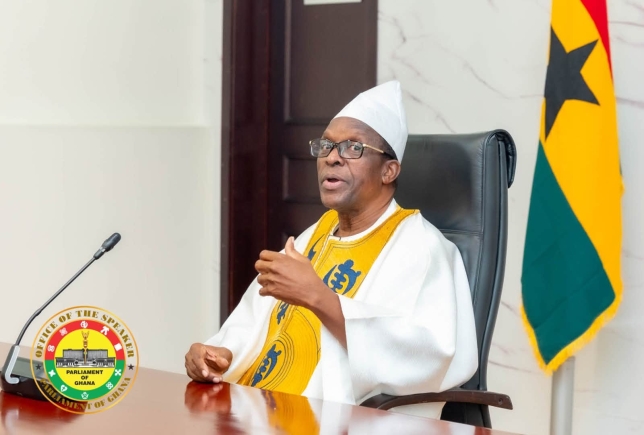
The Speaker ruled a Private Member’s motion inadmissible because the proposed inquiry substantially overlapped with ongoing investigations and criminal proceedings. He relied on Standing Orders 5, 6 and 103(f), citing potential prejudice to parties and the risk of Parliament determining issues reserved for the courts. The ruling concerns the motion in its present form and timing, rather than establishing a general prohibition on parallel parliamentary scrutiny. Practitioners advising parliamentary committees should examine the ruling and proposed terms of reference before assessing its wider implications.

The Speaker of Parliament, Alban Sumana Kingsford Bagbin, has dismissed a Private Member’s motion seeking a parliamentary inquiry into a series of reported narcotics seizures linked to Ghana in recent times.

He ruled that the motion was inadmissible because its proposed inquiry substantially overlapped with ongoing investigations and criminal proceedings before the courts, creating a risk of prejudicing the interests of parties involved.

Acknowledging that the matter fell within his jurisdiction as Speaker, he said he had carefully considered the motion, its proposed terms of reference, the investigations already underway and the pending court proceedings before arriving at his decision.

Giving his ruling during an emergency sitting of the House on Tuesday (Sept 29) Mr Bagbin said the proposed parliamentary inquiry could require Parliament to determine issues that properly fell within the remit of the courts.

“The combined effects of undertaking this evaluation, assessment and investigation would be, at the end of the day, to determine the very issues that the court of competent Jurisdiction is supposed to determine,” he said.

“Accordingly, I am of the considered opinion that permitting the motion to proceed in its present form as presented by a Leader of the House at this particular time may prejudice the interests of parties to pending judicial proceedings. I therefore rule, pursuant to Standing Orders 5, 6, and 103 (f), that the private member's motion is inadmissible,” he ruled.

The ruling followed a petition by the Minority Caucus for the House to be recalled to consider what it described as matters of urgent national importance.

The petition was triggered by the seizure by French authorities of nearly 3.9 tonnes of cocaine at the Port of Dunkirk from a container reportedly originating from Ghana.

The Minority subsequently filed a Private Member’s motion seeking the establishment of an ad hoc committee to investigate the circumstances surrounding the shipment and other major narcotics seizures linked to Ghana.

Mr Bagbin, however, stressed that his ruling did not prevent Parliament from exercising its constitutional oversight responsibilities over narcotics trafficking, port security, border controls or the performance of state institutions.

“This is a procedural determination. It is not a determination of the underlying allegations,” he said.

He explained that the Minority had met the constitutional requirement for an extraordinary sitting, with the members who petitioned him representing more than the 15 per cent threshold required under Article 112(3) of the 1992 Constitution.

“Having satisfied myself that the requisite constitutional threshold has been met, I summoned Parliament,” he said.

The Speaker, however, stressed that summoning Parliament did not automatically mean that the substantive matter in the petition had been approved for debate.

“The request for a meeting does not by itself become a motion merely because Parliament has been summoned,” he said.

According to him, any member seeking a substantive decision of the House was required to comply with the procedures prescribed by the Constitution and the Standing Orders.

The motion, filed on Monday, September 28, by the First Deputy Minority Whip and Member of Parliament for Tolon, Habib Iddrisu, under Standing Order 102, sought the establishment of a committee under Article 103 of the Constitution and Order 262 of the Standing Orders.

The proposed committee was expected to conduct what the sponsor described as a “total, transparent and full-scale bipartisan enquiry” into major narcotics seizures linked to Ghana.

It was to examine the processing, inspection and export of the consignments, the companies and institutions involved, the status of investigations, arrests and prosecutions, international cooperation and intelligence-sharing, security at ports and other entry and exit points, and measures to prevent Ghana from being used as a conduit for international narcotics trafficking.

The committee was also expected to examine the roles of state agencies and private entities involved in the processing and clearance of the consignments.

Mr Bagbin said the motion could not be admitted because its proposed scope substantially overlapped with matters already engaging investigative agencies and the courts.

He cited Standing Order 103(f), which provides that a motion shall not be the subject matter of an action on which a judicial decision is pending where, in the Speaker’s opinion, consideration of the matter may prejudice the interests of parties to the action.

Mr Bagbin said national investigative and law-enforcement bodies had already commenced investigations into the reported narcotics seizures and that some of those processes had progressed into criminal proceedings before courts of competent jurisdiction.

He said official searches available to him indicated that four substantive narcotics-related cases connected to the matters covered by the proposed inquiry were pending before the courts, involving about 21 persons standing trial.

He said he had obtained copies of the relevant court records, including the cases and names of persons involved, to inform his determination.

The Speaker said a parliamentary committee could be required to hear evidence and witnesses on factual matters that could simultaneously arise in the pending criminal proceedings.

“There is, therefore, substantial overlap between the proposed parliamentary fact-finding exercise and matters presently engaging investigative bodies and the courts,” he said.

“That raises precisely the concern contemplated by Standing Order 103 (f),” he added.

Mr Bagbin referred to previous parliamentary discussions on the relationship between parliamentary proceedings and pending judicial cases, saying the sub judice rule did not automatically prohibit Parliament from considering matters connected to litigation.

He said the critical consideration was whether parliamentary proceedings created a sufficient risk of prejudice to parties involved in pending judicial proceedings.

Mr Bagbin was careful to emphasise that Parliament retained its oversight mandate.

Connect With Us : 0242202447 | 0551484843 | 0266361755 | 059 199 7513 |

Read at Graphic Online →
Ghana · Procedure

High Court to determine access to seized phones

High Court to determine access to seized phones

The High Court adjourned the trial of former buffer stock company chief executive Hanan Abdul-Wahab Aludiba and his wife to 7 October 2026 following applications concerning seized property. Defence counsel sought the release of mobile phones said to contain information necessary to prepare the defence, relying on Article 19(2)(e) and (g). The application raises the practical relationship between investigative retention of devices and an accused person’s access to defence material. No determination of the application is reported.

Search Watch live Home News Politics Business Sports Entertainment Opinion Videos More Ex-NAFCO CEO case: High Court sets October 7 to determine application for release of seized mobile phones This comes after lawyers for the accused persons raised concerns over seized properties they say are needed for the preparation of their defence.

Copy link Add 3News as your preferred source on Google Preferred source Article tools Ask AI Listen to this article AI narration Playback position 0:00 3:10 10 10 Playback speed 1× The High Court has adjourned the trial of former Chief Executive Officer of the National Food and Buffer Stock Company Ltd, Hanan Abdul-Wahab Aludiba and his wife, Faiza Seidu Wuni, to October 7, 2026.

This comes after lawyers for the accused persons raised concerns over seized properties they say are needed for the preparation of their defence.

The case was scheduled for the commencement of the prosecution's examination-in-chief of its first prosecution witness.

However, in court on Tuesday, September 29, lead counsel for the first accused, Godfred Yeboah Dame, moved an application seeking an order directing the prosecution to release properties belonging to Hanan, including mobile phones seized from him.

According to Godfred Dame, some of the phones were seized last year, while others were taken from Hanan following his arrest at the airport.

He argued that the phones contain information relevant to the proceedings and are necessary for the first accused to adequately prepare his defence.

Mr Dame relied on the constitutional right of an accused person under Article 19(2)(e) and (g), which provides, among other things, for adequate time and facilities for the preparation of a defence.

Counsel for the second accused, Augustines Obour, also indicated that his client had requested the release of her gadgets, saying they would assist the defence in raising objections.

The prosecution, led by Principal State Attorney Esi Dentaa Yankah, however, opposed the immediate determination of the application, arguing that the day's proceedings were scheduled for the commencement of the examination-in-chief of the prosecution’s first witness.

She told the court that the proceedings would be recorded as the court is a court of record, allowing defence counsel to review the evidence and raise any issues at the appropriate stage.

Esi Yankah further argued that the prosecution had filed its witness statement on June 3, 2026, and a supplementary witness statement on June 11, 2026.

She therefore maintained that there was nothing new in the witness statements that should prevent the prosecution from commencing its case.

The court, presided over by Justice Francis Achibonga, however, held that the application concerning the seized properties had to be determined before the trial could proceed.

The court noted that the first accused's counsel may require the mobile phones allegedly seized by the State to adequately prepare the defence.

The court further observed that adequate preparation for the defence includes the accused person's ability to object to evidence the prosecution intends to present.

The court consequently adjourned the matter to October 7, 2026, at 11am for continuation.

The court indicated that the trial would commence after it had determined the application seeking the release of the phones and other properties belonging to the first accused.

#5 Presidential Drive, Adesa We, Kanda, Greater Accra. Ghana

Read at 3News →
Ghana · Procedure

Bail refused in alleged narcotics export case

Bail refused in alleged narcotics export case

The Kwabenya Circuit Court refused bail to six accused persons in a case concerning 3.9 tonnes of alleged cocaine, citing the seriousness of the offences and charges. It nevertheless directed police to obtain medical attention for two accused persons whenever required, following defence submissions about their health. The accused deny the charges and are due to return on 20 October 2026. The report is relevant to custody and medical-care applications, but does not provide sufficient reasoning to establish any broader proposition about bail eligibility.

The Kwabenya Circuit Court has denied bail to six persons arrested in connection with the seizure of 3.9 tonnes of alleged cocaine at the Tema Port.

The court said it considered the serious nature of the offences and the charges preferred against the accused persons.

The court, however, ordered the police to take two of the accused persons, Francis Narh Amanor, who has suffered a stroke, and Helena Akua Denkyi, a sickle cell patient, to a medical facility whenever they required medical attention.

Defence counsel for the two accused persons drew the court’s attention to their various medical conditions.

The accused persons are Amanor, a freight forwarder; Frank Adu-Boahen, a 71-year-old self-styled evangelist; Togbe Agbeti; Andrew Tetteh Amponsah; Daniel Laryea; and Denkyi.

Amanor and Adu-Boahen have been charged with conspiracy to commit crime, namely the exportation of narcotic drugs, and exportation of narcotic drugs.

They are alleged to have conspired to export 3.9 tonnes of narcotic substances in four containers from the Tema Port to the Netherlands without a licence from the Minister of Health.

The other four accused persons have been charged with abetment of crime.

They are alleged to have failed to properly analyse abnormal scan images of the four containers, thereby facilitating the attempted exportation of the 3.9 tonnes of suspected narcotic drugs.

The accused persons have denied the charges and have been remanded into lawful custody.

They are expected to reappear before the court on October 20, 2026.

Meanwhile, four other accused persons have also been remanded by an Accra High Court and are expected to reappear on October 3, 2026.

In all, 10 persons have been put before the courts following the interception of the 3.9 tonnes of alleged narcotic substances at the Tema Port on August 12, 2026.

Read at MyJoyOnline →
Ghana · Procedure

Attempted arrest of MP raises parliamentary privilege questions

Attempted arrest of MP raises parliamentary privilege questions

Majority Leader James Agalga criticised EOCO’s attempted arrest of MP and lawyer Nana Agyei Baffour Awuah after a court appearance. He argued that EOCO should have approached the Speaker, invoking parliamentary immunity. The report records a disputed enforcement encounter and a parliamentary leader’s position, not a judicial determination of immunity or the arrest’s legality. Advisers should distinguish the applicable constitutional protections from procedural expectations under Parliament’s Standing Orders.

Search Watch live Home News Politics Business Sports Entertainment Opinion Videos More The way EOCO went about the attempted arrest of Baffour Awuah was unprofessional – Agalga He explained that Members of Parliament enjoy some level of immunity under the Standing Orders of Parliament, and EOCO should have channeled its request through the Speaker of Parliament, Alban Bagbin.

Copy link Add 3News as your preferred source on Google Preferred source Article tools Ask AI Listen to this article AI narration Playback position 0:00 3:28 10 10 Playback speed 1× Majority Leader, James Agalga, has criticised the Economic and Organised Crime Office (EOCO) over its attempted arrest of the Member of Parliament for Manhyia South, Nana Agyei Baffour Awuah.

"The way EOCO went about the attempted arrest of Baffour Awuah was unprofessional," Mr Agalga said on TV3's Agenda on September 29.

He explained that Members of Parliament enjoy some level of immunity under the Standing Orders of Parliament, and EOCO should have channeled its request through the Speaker of Parliament, Alban Bagbin.

The incident occurred on Tuesday, September 23, 2026, at the Accra High Court Complex, shortly after the MP, who is also a lawyer, had appeared to represent nurse Salomey Baffoe Awiti in a bail application linked to the ongoing "Ghana Jollof" case.

According to videos circulating online, a female EOCO official approached Baffour Awuah outside the court and asked him to accompany her to EOCO headquarters. The MP insisted on identification and an arrest warrant, which he said were not produced, and offered to drive himself in his own vehicle. The official reportedly insisted he board the EOCO vehicle.

A confrontation ensued around his vehicle, after which Baffour Awuah drove off to Parliament, which is currently on recess. He later described the encounter as an attempted state-sponsored kidnapping and an attempt to intimidate him over his defence of his client.

EOCO, in a statement on September 23, confirmed the attempted arrest. The Office said it was acting in lawful discharge of its duties and that Baffour Awuah had ignored two invitations issued in February 2026 to assist in an ongoing investigation.

"The Office had previously invited Hon. Baffour Awuah to assist with the investigation on two occasions in February 2026. The invitations were not honoured," EOCO stated, adding that the arrest was not completed because officers assessed that a counter-action could endanger public safety.

Baffour Awuah has disputed EOCO's account. He said he was never personally the subject of investigation, but rather his former law firm, Sarkodie Baffour Awuah & Partners, which represents SIC Life Savings and Loans Company Limited, which is under investigation. He said he responded on February 18, 2026, informing EOCO that he had become an MP and had referred the matter to the Clerk of Parliament, and that a lawful representative of the firm subsequently cooperated on three occasions - March 4, March 18, and April 30, 2026.

The incident has drawn sharp reactions. The Ghana Bar Association (GBA) expressed grave concern, saying enforcement actions involving lawyers executing their duties must adhere to constitutional guarantees. The Ashanti Regional branch of the NPP condemned the move as unlawful, while private legal practitioner Martin Kpebu has also argued that EOCO should have gone through the Speaker, citing parliamentary privilege.

EOCO has maintained that while it respects parliamentary privileges and immunities, being an MP does not place anyone beyond the law.

#5 Presidential Drive, Adesa We, Kanda, Greater Accra. Ghana

Read at 3News →
Ghana · Procedure

Airports company chief issues notice over online allegations

Airports company chief issues notice over online allegations

Lawyers for Ghana Airports Company Limited managing director Yvonne Nana Afriyie Opare issued a cease-and-desist notice concerning Facebook publications allegedly linking her to narcotics trafficking and abuse of office. They seek a retraction, public apology and undertaking against repetition. Despite the report’s headline, the supplied body establishes a demand letter rather than the filing of proceedings. The matter illustrates pre-action responses to allegedly defamatory implications created by combining names, photographs and statements online.

Search Watch live Home News Politics Business Sports Entertainment Opinion Videos More GACL MD sues over comment linking her to alleged narcotics trafficking and abuse of office They are also demanding an unconditional retraction, an unreserved public apology and a written undertaking not to repeat the allegations.

Copy link Add 3News as your preferred source on Google Preferred source Article tools Ask AI Listen to this article AI narration Playback position 0:00 2:20 10 10 Playback speed 1× Lawyers representing Ghana Airports Company Limited (GACL) Managing Director Yvonne Nana Afriyie Opare have issued a cease-and-desist notice over social media publications they say falsely linked their client to alleged narcotics trafficking and abuse of office.

In a letter addressed to Facebook user Samuel Bryan Buabeng, the lawyers took particular issue with a September 22, 2026, publication on his publicly accessible Facebook page.

According to the lawyers, the post placed Opare’s name and photograph alongside that of Frank Danquah, whom the post referred to as “Frank Dankwa” and described as her “favourite member of staff” and “the AVSEC supervisor who aided the drug baron.”

The publication also alleged that Danquah had emptied bank accounts, with the least containing more than GH¢500,000, before concluding that “the Cocainenomy is on the right footing, with people in high places benefiting immensely.”

The lawyers contend that the publication, particularly the use of Opare’s photograph and name, insinuated that she had an improper association with Danquah and was connected to or benefited from narcotics trafficking.

They described the allegations as “grave imputations of criminal involvement, corruption and abuse of office” and said their client “categorically denies and rejects” them.

The letter further stated that Danquah’s employment with GACL began on September 1, 2004, and that he has “no personal connection” with Opare beyond their respective official roles.

The lawyers said Opare “expressly rejects” the description of Danquah as her “favourite member of staff” and maintains that she neither participated in nor benefited from the alleged criminal activity.

They have demanded that the September 22, 2026, publication and related defamatory comments be removed, along with other posts containing what they describe as false and defamatory allegations.

They are also demanding an unconditional retraction, an unreserved public apology and a written undertaking not to repeat the allegations.

A writ of summons has also been filed at the Accra High Court, with Opare seeking GH¢10 million in damages over the alleged defamatory publications.

#5 Presidential Drive, Adesa We, Kanda, Greater Accra. Ghana

Read at 3News →
Ghana · Regulation

Audit launch renews calls for disallowance and surcharge enforcement

Audit launch renews calls for disallowance and surcharge enforcement

At the launch of the 2026 financial year audit, speakers urged stronger use of the Auditor-General’s constitutional disallowance and surcharge powers. They also advocated digital auditing and more effective recovery of misapplied public funds. These are enforcement proposals, not reported surcharge decisions or changes to the governing law. Counsel advising public bodies and affected officers should distinguish existing legal liabilities and challenge procedures from calls for more punitive recovery measures.

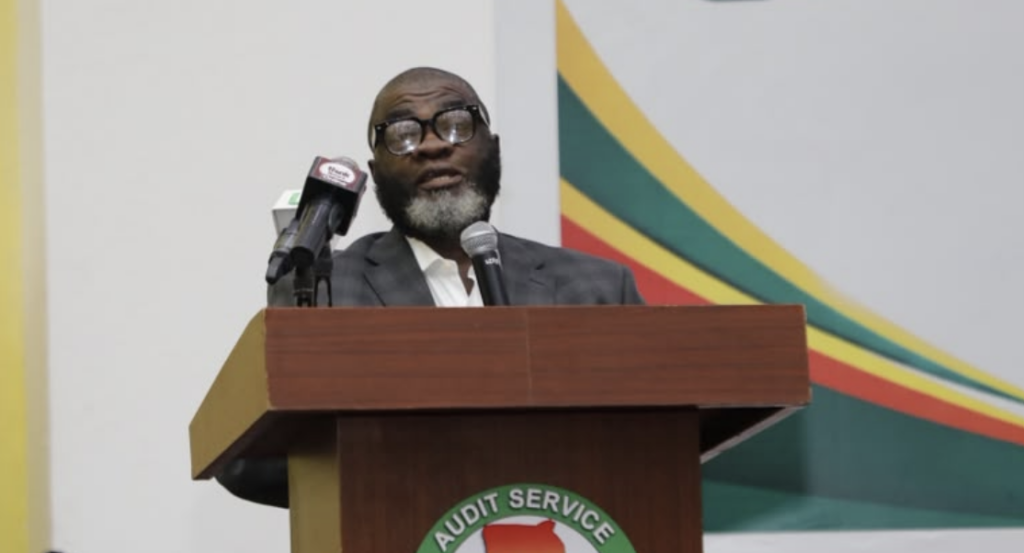
The Ghana Audit Service has been urged to fully enforce its constitutional powers of disallowance and surcharge against offenders to deter the misappropriation of public funds.

It has also been urged to modernise its operations through performance-based digital and artificial intelligence (AI)-enabled auditing systems to keep pace with increasingly complex public financial systems.

Professor Francis Dodoo, Presidential Advisor on the National Anti-Corruption Programme, and Dr David Ofosu-Dorte, Senior Partner at AB & David Africa, made the call at the launch of the 2026 Financial Year Audit in Accra on Tuesday.

They said stronger enforcement and modern auditing systems were critical to building public trust, safeguarding Ghana’s democratic credentials and protecting national resources for development.

Prof Dodoo said figures from the Auditor-General’s reports indicated that the country had lost GHS100 billion over the past six years through financial irregularities.

He urged the Audit Service to adopt a firmer approach towards offenders, saying leniency in dealing with financial misconduct undermined efforts to protect public resources.

He said family ties, friendships, church and political connections, as well as lobbying, were sometimes used to seek forgiveness, reduced punishment or the complete clearance of offenders.

Prof Dodoo said those who misappropriated or unlawfully used public funds must be held accountable to protect resources needed for schools, hospitals, water systems and other social amenities.

He, therefore, urged the Auditor-General to make surcharge rates sufficiently punitive and higher than prevailing Treasury bill rates to serve as a stronger deterrent and ensure effective recovery of public funds.

Dr Ofosu-Dorte said the Auditor-General’s constitutional powers to disallow and surcharge were significant tools for promoting accountability, credibility and sustainability in public financial management.

He urged the Audit Service to strengthen the quality of its reports and involve relevant institutions and professionals in the audit process to ensure that punitive actions were legally sound and did not amount to harassment.

“There are institutions such as the Police, the internal auditing organisations, the Special Prosecutor and the recent Value for Money Office, and their activities in one way or the other touch on audit or rely on audit… all these institutions must collaborate with the Audit Service,” he said.

Dr Ofosu-Dorte also called for the accelerated adoption of digital technologies, including AI-assisted systems, to improve monitoring, tracking and reporting.

“If we do not at this stage move away from manual methods of auditing as quickly as we can and deploy modern software, such as AI-assisted accounting systems, you will come to the point where the auditor will be lost as to what is being done,” he said.

On capacity building, he recommended broadening the qualifications and expertise required for auditors beyond accounting to include law, engineering, quantity surveying and procurement.

He said such multidisciplinary expertise would help the Audit Service identify and prevent recurring systemic errors in public financial management.

Read at MyJoyOnline →
Ghana · Legislation

Proposed hate-speech dialogue includes expression safeguards

Proposed hate-speech dialogue includes expression safeguards

The Speaker endorsed a proposed national dialogue on hate speech, abusive online content and responsible digital communication. The President has asked the Ghana Journalists Association and Media Foundation for West Africa to convene the engagement, with a roadmap intended to protect freedom of expression while addressing harmful content. No bill, offence or new enforcement power is reported. Media and constitutional practitioners should monitor whether subsequent proposals distinguish threats and unlawful conduct from protected criticism.

The Speaker of Parliament, Alban Sumana Kingsford Bagbin, has backed President John Dramani Mahama’s call for a national dialogue on hate speech and abusive online content.

He said the President’s call as timely and necessary to protect Ghana’s democratic culture.

He explained that the proposed national stakeholder engagement should bring together relevant institutions and stakeholders to examine the growing incidence of abusive, insulting, threatening and hateful speech in the country, particularly on social media and other digital platforms.

President Mahama last week directed the Ghana Journalists Association (GJA) and the Media Foundation for West Africa (MFWA) to convene the engagement to address hate speech, abusive online content and responsible digital communication. The initiative is expected to develop a national roadmap that tackles harmful content while protecting freedom of expression.

Addressing Parliament in Accra on Friday (Sept 29), Mr Bagbin said he had taken note of the President’s call and the support it had received across the country and beyond.

“I believe that the call is timely and deserves the support of all persons and institutions committed to the preservation of our democracy,” he said.

The Speaker said the increasing intensity of public discourse should concern all Ghanaians, particularly at a time when social media had expanded the democratic space and given citizens unprecedented opportunities to participate in national affairs.

He acknowledged that digital platforms had enabled citizens to express opinions, criticise public officials, expose wrongdoing and demand accountability.

“These are gains which must be protected,” he said, saying that freedom of speech and expression, including freedom of the press and other media, was guaranteed by the Constitution.

He, however, said the constitutional protection of free expression should not be interpreted as a licence for the degradation of public discourse.

He said political disagreement, satire, dissent and vigorous debate were essential features of democracy, but expressed concern that disagreements were increasingly being communicated through insults, personal attacks, ethnic insinuations, threats and allegations repeated without regard to their truth or consequences.

He said the speed and reach of digital platforms had amplified such language and increased the potential impact on society. “This should concern us all, irrespective of political affiliation,” he said.

The Speaker said the national conversation proposed by the President should be broad, inclusive and measured, and should not become an avenue for suppressing dissent or shielding public officials from legitimate criticism.

At the same time, he said legitimate concerns about freedom of expression should not be used to justify threats, incitement, deliberate falsehoods or reckless abuse of other people.

Mr Bagbin, therefore, urged Parliament to become an active participant in the national dialogue, directing the appropriate committees, particularly the Human Rights Committee, to exercise their oversight responsibilities.

“I therefore expect the appropriate committees of this House to take an active interest in the matters and to engage relevant constitutional, regulatory and civil society bodies on the stage of our public discourse,” he said.

The Speaker added that Parliament should examine the adequacy of Ghana’s existing legal and institutional framework for dealing with abusive and harmful speech, while ensuring that any response was constitutional, proportionate and carefully calibrated.

“We must protect citizens against genuinely unlawful conduct without criminalising disagreement.

“We must protect public officials from threats without protecting them from criticism and we must preserve the freedom of expression upon which democratic accountability itself depends.”

The Speaker also turned the spotlight on Parliament itself, saying MPs could not credibly demand responsible speech from journalists, broadcasters, bloggers, content creators and other citizens without first examining their own conduct.

“Parliament must be prepared to look inward,” he said, saying that “we cannot credibly demand higher standards of public discourse from society if we are unwilling to demand those standards of ourselves.”

Mr Bagbin said parliamentary proceedings, committee activities, press conferences, interviews, public meetings and social media engagements all contributed to shaping the national conversation.

He expressed concern that some language used by MPs, both inside and outside Parliament, had fallen below the standards expected of elected representatives.

“Robust disagreement is legitimate. Strong criticism is legitimate. Holding government, the opposition, the Speaker, leadership and every institution or state to account is legitimate.

He also urged the leadership of both political parties to discourage the elevation or reward of individuals whose public prominence was based on abusive language.

“Our address to both political parties’ leaders: Don’t reward only bitter tongues,” he said, warning that doing so could encourage others to adopt similar conduct.

Mr Bagbin said Ghana’s democratic stability should not be taken for granted, stressing that democracy was sustained not only by constitutions, elections, courts and Parliament, but also by discipline, decency and a political culture that allowed citizens to disagree without denying one another their humanity and equal citizenship.

He said words had the power either to mobilise citizens towards a common national purpose or inflame passions and deepen divisions.

“We must therefore be careful that through the cumulative effect of our language and conduct, we do not push our country towards the precipice from which it becomes increasingly difficult to retreat,” he said.

The Speaker’s intervention comes as the President’s proposed national engagement gathers attention, with the Presidency calling for participation by institutions including the National Media Commission, religious bodies, security agencies, civil society organisations, traditional media organisations, bloggers, influencers and social media content creators.

Mr Bagbin concluded by calling on MPs and political actors on both sides of the House to moderate their language and demonstrate that firmness of political conviction did not have to be accompanied by disrespect.

“This responsibility applies equally to the Majority and the Minority,” he said, adding that the same standards should apply whether political actors spoke on the floor of Parliament, at committee meetings, press conferences, on radio and television or through social media.

Connect With Us : 0242202447 | 0551484843 | 0266361755 | 059 199 7513 |

Read at Graphic Online →
Ghana · Legislation

Constitutional reform debate turns to amendment procedure

Constitutional reform debate turns to amendment procedure

Two political scientists opposed calls for a constituent assembly to consider the Constitution Review Committee’s proposals, arguing that existing consultation and constitutional amendment procedures should suffice. The debate concerns the route to reform rather than an adopted amendment or authoritative legal ruling. Practitioners should distinguish additional consensus-building arrangements from the mandatory procedures applicable to entrenched and non-entrenched provisions. The supplied report does not establish that any proposed constitutional change has entered formal enactment procedures.

Two political scientists have kicked against the proposal for the establishment of a constituent assembly to deliberate on reforming the 1992 Constitution.

They contend that the H. Kwasi Prempeh Constitution Review Committee did a comprehensive job by engaging the citizenry, meeting with professional bodies, past presidents, and other key stakeholders.

The two, Professor Joseph Atsu Ayee and Dr John Osae-Kwapong, were responding to calls by the New Patriotic Party (NPP) for the government to establish a Constituent Assembly to deliberate on the proposed changes to the 1992 Constitution before putting them to a referendum.

The party said the move was necessary to build a broad national consensus on the proposed reforms and resolve differences between the government and the Constitution Review Committee (CRC).

It is the contention of the NPP that the proposed Constituent Assembly should include representatives of political parties, organised labour, professional bodies, the National House of Chiefs, religious organisations, women’s groups, persons with disabilities, students and the youth, private sector, civil society and the regions.

Prof. Ayee said he did not think that the country needed a Constituent Assembly “because we are not writing a new constitution as we had in the past.”

“The amendment of the entrenched and non-entrenched provisions will need a national referendum and parliamentary process respectively, as indicated by the Constitution.

“The timelines are important to ensure that the amendment process is on course. There are a few contentious recommendations such as the five-year tenure of office of the president and the extensive appointing powers of the president, which seem not to have been addressed.

He said the bottom line was that the Constitution must improve the quality and standard of living of all Ghanaians.

“For the Constitution to work and improve living standards, both leaders and citizens need behavioural and attitudinal changes,” he stated.

That, he said, entailed developing and strengthening time-honoured values such as promoting the public interest, patriotism, hard work, honesty, transparency and accountability.

“The revised Constitution will be operated by men who must possess positive values to make it work.

We should not live under the illusion that the amended Constitution has the magic wand to make Ghana great and strong.

“In addition, there is the need to properly balance the non-partisan (head of state) and partisan (head of government) features of the executive presidency.

For his part, Dr Osae-Kwapong said although the concerns raised about Ghana's constitutional reform process were legitimate, he did not support the call for a Constituent Assembly.

He explained that amending the 1992 Constitution meant changing the core architecture of the country’s governance system.

He said a durable constitution was one that citizens recognised as their own.

“With that principle in mind, I believe the current process already provides, and can continue to provide, the consultation the reforms require,” he said.

Moreover, he said the CRC engaged citizens across several regions and met with professional bodies, past presidents, and other key stakeholders.

He said changes to entrenched provisions would require a referendum, and, therefore, give the citizenry the final say, and would allow different groups to weigh in again by mobilising for or against passage and making their case directly to the public.

Connect With Us : 0242202447 | 0551484843 | 0266361755 | 059 199 7513 |

Read at Graphic Online →