
§ Briefing, Friday, 2 October 2026

Petroleum tax award and investigative safeguards lead today’s briefing

An ICC tribunal has rejected Tullow Ghana’s challenge to a US$393 million tax assessment. Investigative safeguards, magistrate vacancies and a reported water-project award also warrant practitioners’ attention.

Ghana · Judgment

ICC tribunal rejects Tullow’s challenge to tax assessment
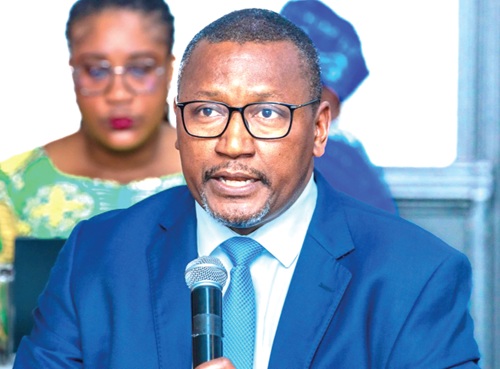
ICC tribunal rejects Tullow’s challenge to tax assessment

An ICC arbitral tribunal sitting in London reportedly dismissed Tullow Ghana Limited’s challenge to a US$393 million GRA assessment in an award dated 22 September 2026. The report states that the assessment did not breach the applicable Petroleum Agreements and that the penalty fell outside Article 12 of those agreements, so its imposition could not itself breach that provision. The award matters to petroleum-sector advice on the interaction between contractual tax protections and statutory revenue powers. Practitioners should examine the award’s reasoning and operative terms before treating the reported outcome as resolving questions beyond this dispute.

The International Court of Arbitration of the International Chamber of Commerce (ICC) has dismissed a challenge to a $393 million tax assessment liability and a penalty on Tullow Ghana Limited (TGL) by the Ghana Revenue Authority (GRA).

The decision of the tribunal, which is final and binding means that there is no legal hurdle currently impeding Ghana from enforcing the $393 million tax assessment.

The tribunal was presided over by Professor Albert Jan van den Berg, with Dr Michael Pryles Ao PBM, nominated by Tullow Ghana and J. Christopher Thomas KC, nominated by Ghana as co-arbitrators, with Tarunima Vijra as its Secretary.

In an arbitral award dated September 22, 2026, the tribunal based in London, United Kingdom, held that the tax assessment was reasonable, did not breach any law, such as the Petroleum Income Tax Law, PNDCL 188, as well as the Petroleum Agreements (PA) between Ghana and TGL and other partners.

“The Tribunal is satisfied that the tax assessment cannot be regarded as unreasonable,” the tribunal added.

With regard to the penalties imposed by GRA after the tax assessment, the tribunal held that they were not covered under the PA and, therefore, could not be termed as under the PA.

“Accordingly, the tribunal determines that the penalty in the GRA assessment does not fall within the scope of Article 12 of the Petroleum Agreements.

It follows that the imposition of the penalty cannot as a matter of principle, constitute a breach of Article 12,” the court added.

The arbitration initiated by TGL followed a tax assessment by GRA in 2022 in which the revenue authority accused Tullow of tax evasion by under-declaring its income between 2016 and 2019 in order to reduce its tax liability.

According to the GRA, the said undeclared income amounted to more than $561 million, which TGL received as insurance proceeds to make up for losses the oil company would have made following the shutdown of FPSO Kwame Nkrumah.

After extensive investigations, the GRA made a tax assessment of more than $196 million on the $561 million and further imposed a penalty, bringing the total tax liability to $393 million.

Tullow Ghana vehemently opposed the assessment by the GRA and its notice of dispute before the ICC, and made its case on many grounds which could be summed up in two.

First, that the assessment was in breach of the PA of which TGL was a party to and secondly, the said insurance arrangement was put in place by Tullow Oil PLC, its parent company, and it was Tullow PLC that paid the insurance premium.

In its response, Ghana rejected the claims by TGL and argued that the assessment was not in breach of any law or the PA, and that indeed the entire process leading to the assessment was in conformity with the laws of the country and its contractual obligations.

Regarding the insurance, Ghana contended that TGL was a bona fide subsidiary of Tullow PLC, and that it was the direct beneficiary of the insurance.

“As the owner of the asset and who was directly and negatively impacted financially by the physical damage to the insured asset, TGL is the insured in law and in-fact under the insurance policy,” it stated.

The Minister of Finance, Dr Cassiel Ato Forson, and the Commissioner-General of GRA, Anthony Kwasi Sarpong, have both welcomed the ruling, saying it affirmed the country’s position that every company operating in the country, regardless of its size, was subject to Ghanaian law.

Tullow has also issued a statement acknowledging the ruling, but expressed disappointment at the tribunal’s decision.

The company said it would now consider next steps after further engagement with the government and provide an update in due course.

In a statement, Dr Forson said the government would continue discussions with Tullow to resolve the outstanding tax matters amicably.

“The discussions cover the matter determined by the tribunal and separate proceedings concerning the disallowance of loan interest,” the Finance Minister said.

Dr Forson described Tullow as a vital partner and Ghana’s largest petroleum producer, whose operations in the Jubilee and TEN fields supported the country’s energy security, domestic gas supply and thousands of Ghanaian livelihoods.

He said it was in the national interest for the relationship between Ghana and Tullow to endure.

He said the country’s laws empowered the GRA to determine the time and manner in which assessed liabilities were settled.

Dr Forson said the government would ensure that revenues due to the Ghanaian people were secured while preserving Tullow’s ability to continue operating and investing in Ghana as a going concern.

The Finance Minister and GRA also acknowledged the work of the Office of the Attorney-General, officials of the GRA and the ministry, and Ghana’s external legal counsel, Foley Hoag LLP, in defending the interests of the Republic.

In a statement, the GRA said the outcome underscored the importance of strong institutions, sound tax administration and the consistent application of Ghana’s laws.

It recognised the important contribution of the petroleum sector to Ghana’s economy and said it remained committed to administering the tax laws in a fair, transparent, consistent and predictable manner.

Read at Graphic Online →
Ghana · Procedure

OccupyGhana seeks scrutiny of investigative restrictions

OccupyGhana seeks scrutiny of investigative restrictions

OccupyGhana has asked parliamentary committees and the Attorney-General to scrutinise EOCO and BNI account freezes, bail conditions and reporting requirements. It alleges that approximately 66 accounts linked to the PDS investigation have been frozen since April 2026 and that officials and two lawyers face repeated reporting obligations without charges. These are allegations and requests for oversight, not findings that the restrictions are unlawful. For counsel, the report highlights the importance of examining the legal basis, duration and review mechanisms for restrictions imposed during investigations.

OccupyGhana is calling on Parliament to scrutinise the exercise of investigative powers by the Economic and Organised Crime Office (EOCO) and the Bureau of National Intelligence (BNI), particularly the use of account freezes, agency-imposed bail and reporting requirements.

The pressure group wants Parliament’s Constitutional, Legal and Parliamentary Affairs Committee and Defence and Interior Committee to examine how the two agencies apply such measures in ongoing investigations.

It has also asked the Attorney-General to review the use of freezing orders, bail conditions and reporting requirements to ensure they comply with constitutional safeguards.

OccupyGhana’s concerns include the ongoing investigation involving Power Distribution Services (PDS) Ghana Ltd.

The group says about 66 accounts linked to PDS and individuals associated with the company have been frozen since April 2026, while bail conditions for two PDS officials were reportedly increased from GH¢50 million each to GH¢100 million each within a week.

It also says the officials and two lawyers connected to the matter have been required to report to EOCO three times a week since May, despite no charges having been filed as of the date of its statement.

The group maintains that the seriousness of allegations under investigation should not, by itself, justify indefinite restrictions or departures from constitutional safeguards.

It is urging investigative agencies to charge suspects where sufficient evidence exists and lift restrictions where the evidence does not support prosecution, arguing that due process is essential to ensuring that economic-crime investigations and the recovery of public funds remain lawful.

Read at MyJoyOnline →
Ghana · Procedure

High Court directs execution of MP’s arrest warrant through Speaker

High Court directs execution of MP’s arrest warrant through Speaker

Nana Agyei Baffour Awuah reported to EOCO on 1 October after the Accra High Court issued an arrest warrant and authorised the search for and seizure of documents relevant to its investigation. The court reportedly directed that the arrest be executed through the Speaker of Parliament. EOCO’s account of unsuccessful invitations is disputed by the MP, and the alleged financial wrongdoing remains under investigation. The procedural significance lies in the warrant’s terms and the interaction between investigative powers and parliamentary safeguards, rather than any determination of liability.

Menu Search for Switch skin Home News Politics Business Sports Crime Africa More World Education Editorial Features Lifestyle Technology Gallery Contact Us Facebook X TikTok RSS Switch skin Search for Hot! News Manhyia South MP Baffour Awuah turns mimself in to EOCO after court issues arrest warrant October 1, 2026 1 minute read Manhyia South MP Nana Agyei Baffour Awuah has turned himself in to the Economic and Organised Crime Office (EOCO), a day after the Accra High Court issued a warrant authorising his arrest.

The MP reported to EOCO on Thursday morning, accompanied by his lawyer Samuel Atta Akyea. He was later joined at the EOCO premises by First Deputy Minority Whip Habib Iddrisu and Effia MP Isaac Boamah-Nyarko, as well as other minority MPs who went to show solidarity.

The High Court on September 30 granted EOCO a warrant to arrest the MP and to search for and seize documents relevant to an ongoing investigation. The court however directed that the arrest should be executed through the Speaker of Parliament.

EOCO had told the court that it had exhausted all reasonable means to secure his voluntary attendance after inviting him twice in February 2026.

According to EOCO, the probe is into alleged unauthorised financial transactions at SIC Life Savings and Loans Company Limited, resulting in alleged financial loss, dissipation of public funds and money laundering.

Deputy Attorney-General Dr Justice Srem-Sai confirmed the warrant, saying it follows the MP's refusal to honour EOCO's invitation.

The MP has disputed EOCO's account. He says the February 10 invitation was addressed to the Senior Partner of his former law firm, Sarkodie Baffour Awuah & Partners, which was engaged by SIC Life to recover about GH¢3.5 million invested with defunct Equity Savings and Loans a debt that had grown to about GH¢14 million with interest.

Baffour Awuah says after becoming an MP, he referred the letter to the Clerk to Parliament on February 18, and a representative of the firm cooperated with EOCO on March 4, March 18 and April 30, submitting a formal written statement.

The latest development comes a week after EOCO officers attempted to arrest him at the Accra High Court Complex on September 23, shortly after he appeared as counsel in the Ghana Jollof case an attempt that drew criticism from the Ghana Bar Association.

EOCO, led by Executive Director Raymond Archer, says the attempted arrest was lawful under Section 19 of Act 804 to secure his attendance.

Read at Ghanaian Times →
Ghana · Profession

JUSAG reports more than 130 courts without magistrates

JUSAG reports more than 130 courts without magistrates

JUSAG says more than 130 courts nationwide lack magistrates and has called for expedited recruitment. Its president also sought improved lower-bench remuneration and security arrangements at the Association of Magistrates and Judges of Ghana’s annual meeting. The reported vacancies raise material access-to-justice concerns, including potential delays in hearings and increased burdens on functioning courts. Practitioners should verify local sitting arrangements rather than assume that recruitment or replacement postings have been approved.

The Judicial Service Staff Association of Ghana (JUSAG) says more than 130 courts across the country are currently without magistrates, a situation that requires urgent recruitment to ensure efficient administration of justice.

Mr Samuel Afotey Otu, President of JUSAG, has, therefore, appealed to the Government to expedite the recruitment process to fill the vacancies.

He made the appeal at the 45th Annual General Meeting of the Association of Magistrates and Judges of Ghana (AMJG) in Accra on Thursday, held on the theme: “Balance Beyond the Bench: Harmonising Duty, Justice and Life.”

Mr Otu also appealed to the Attorney-General and Minister of Justice to take a second look at the remuneration and conditions of service of judges and magistrates and develop a unique policy to address their specific needs.

He said the salary gap between judges of the lower courts and those of the Superior Courts should be reduced by improving the salaries of judges in the lower courts.

“The salary gap between the lower Bench and Superior Court Judges should be closed a bit by upping the salaries of the lower Bench,” he said.

Mr Otu also suggested the provision of police escorts or orderlies for members of the lower Bench, arguing that judges and magistrates required similar protection.

“Judges and Magistrates do the same work, although at different levels, but need similar protection,” he added.

The JUSAG President called on the Judiciary and the Government to promote a working environment where judicial officers and staff could serve with dignity while living fulfilling lives.

“Let us, therefore, continue to build a Judicial Service where excellence at work is matched by well-being,” he said.

Mr Otu also reminded the Government of JUSAG’s lawful demands in relation to Article 149 of the 1992 Constitution, saying: “Government must act now because staff are not happy.”

On attacks against judges and judicial officers on social media, Mr Otu said judicial officers would continue to perform their duties despite criticism and urged the public to accord them the respect and courtesy they deserved.

He said the risks associated with judicial work continued to evolve, particularly in the era of social media, where images, names and activities of judges, magistrates and judicial officers could easily find their way onto various platforms.

“In some instances, this can expose the judges and staff, as well as their families, to risks that were less prevalent in the past,” he stressed.

Dr Dominic Ayine, Attorney-General and Minister of Justice, in a speech read on his behalf, said judicial office, unlike other forms of public service, carried particular restraints.

He said those restraints were necessary to meet the constitutional requirement for judges and magistrates to remain independent and impartial.

Dr Ayine said judges and magistrates could not always respond publicly to criticism and had to exercise considerable caution in their associations and public engagements.

“Balance should not be misunderstood as a retreat from duty. Rather, it is about creating the conditions that enable judicial officers to discharge that duty sustainably, effectively, and with clarity of mind that justice demands,” he said.

The Attorney-General said the Executive, the Bar and the Judiciary had distinct constitutional responsibilities, and judicial independence required that those boundaries remained respected.

He said independence did not mean isolation, adding that the various arms of the justice system could respect their constitutional boundaries while working together to improve the administration of justice, reduce avoidable delays, strengthen court infrastructure and embrace appropriate technology.

Dr Ayine commended the AMJG for choosing a theme that invited stakeholders to look beyond judgments, courtrooms and case statistics and consider the complete person behind the judicial office.

Read at MyJoyOnline →
Ghana · Judgment

Disclosure sought over reported US$235 million desalination award

Disclosure sought over reported US$235 million desalination award

The Ghana Water Justice Network has called for disclosure and an independent review following a reported US$235 million award in favour of Befesa Desalination Developments Ghana Limited. The dispute is said to arise from the Teshie-Nungua desalination project and its Water Purchase Agreement with Ghana Water Company Limited. The supplied report does not establish the deciding forum, grounds of liability or enforcement status, so the network’s description should not substitute for the decision itself. The matter warrants attention from public-contract and infrastructure practitioners because of its potential fiscal consequences and the allocation of contractual risk.

Search Watch live Home News Politics Business Sports Entertainment Opinion Videos More $235m judgment debt: GWJN calls for full disclosure and independent review of Teshie-Nungua project According to them, what makes the present situation troubling is that the warning signs have been there for years.

Copy link Add 3News as your preferred source on Google Preferred source Article tools Ask AI Listen to this article AI narration Playback position 0:00 4:03 10 10 Playback speed 1× The Ghana Water Justice Network (GWJN) says it is deeply concerned about the US$235 million judgment debt granted against Ghana, granted to Befesa Desalination Developments Ghana Limited arising from the Teshie-Nungua Desalination Plant and the Water Purchase Agreement between Ghana Water Company Limited and Befesa.

For them, apart from this being another judgement-debt issue, the award raises the important question of; who eventually bears the cost when poorly conceived water privatisation contracts go wrong?

A statement they issued said Ghanaians deserve to know how we got here.

What makes the present situation troubling is that the warning signs have been there for years, the statement said.

It added that residents and community groups, including the Teshie Concerned Citizens Association, repeatedly raised concerns about the taste, salinity, and general acceptability of water supplied from the plant.

In the early period of this arrangement, Integrated Social Development Centre (ISODEC) and Water Citizens worked with the community to raise concerns about the financial viability of the project and its implications to the Ghana Water Company Limited.

Chiefly, the Public Utility Workers' Union (PUWU) also persistently warned about the financial burden the agreement was placing on GWL, all to deaf ears.

PUWU questioned why the country had committed itself to an expensive desalination arrangement when cheaper alternatives could have been considered, and petitioned successive governments over the serious technical and financial problems of the project.

They noted that the fact that this project came about from an unsolicited proposal is what makes the whole arrangement questionable and even scandalous.

"The central question here is; if communities, workers and civil society raised all these red flags, why did the authorities persist, only for the country to be saddled with a judgement debt? " the statement said.

They call for full disclosure of the contractual and financial arrangements surrounding the project, including the Water Purchase Agreement, subsequent amendments and renegotiated terms, the State Guarantee and the key findings from the arbitration.

"Accountability must be provided for the entire life of the project. This issue must not be turned into another partisan exchange in which one party blames another. We therefore also, demand an independent, public-interest review to establish what went wrong, where institutional failures occurred, and whether the public interest was adequately protected and for persons responsible for any wrongdoing to be held accountable.

"The people of Ghana must not pay for failed Water Sector PPP Experiments

We strongly submit that the financial consequences of this PPP failure must not be passed on to ordinary people through higher water tariffs, as many households are already struggling with current high tariffs. Any attempt to recover this judgement-debt through water tariffs must therefore be stopped. Our Demands This new experience requires the Government to rethink its dogged PPP stance in the water sector," the statement said.

It added that the lesson from this failed water sector PPP should go beyond this one contract.

"We call for; 1. Full disclosure and an independent review of the Teshie-Nungua project and the decisions that resulted in the US$235 million judgement debt. 2. Protection of the people of Ghana from any attempt to recover this liability through increases in water tariffs. 3. Full transparency and public-interest scrutiny of any proposed settlement, renegotiations in relation to the desalination plant. 4. Greater public investment, parliamentary oversight and accountability in the financing and management of the country’s water infrastructure. "

#5 Presidential Drive, Adesa We, Kanda, Greater Accra. Ghana

Read at 3News →