§ Briefing, Wednesday, 7 October 2026

Social protection instruments lead; defence access and licensing under scrutiny

Ghana is due to launch social protection and gender equity instruments today. Other developments concern defence access to seized devices, offshore licensing safeguards and public finance compliance.

Ghana · Legislation

Social protection and gender equity instruments scheduled for launch

Social protection and gender equity instruments scheduled for launch

The Ministry of Gender, Children and Social Protection has announced today's launch of the Social Protection Act, 2025 (Act 1148), Social Protection Regulations, 2026 (L.I. 2521), and Affirmative Action (Gender Equity) Regulations, 2026 (L.I. 2522). The instruments address the coordination of social protection and implementation of the Affirmative Action (Gender Equity) Act, 2024 (Act 1121). Practitioners advising affected institutions should obtain the texts to establish their precise responsibilities and implementation requirements. The launch announcement should not be treated as confirmation of the instruments' commencement dates.

Three major legal instruments on social protection and gender equity will be launched on Wednesday, October 7, 2026, the Ministry of Gender, Children and Social Protection has said.

In a press statement issued Tuesday, the ministry said the instruments are the Social Protection Act, 2025 (Act 1148), the Social Protection Regulations, 2026 (L.I. 2521), and the Affirmative Action (Gender Equity) Regulations, 2026 (L.I. 2522).

The launch, under the theme "Building An Inclusive, Equitable and Resilient Ghana: From Legislation to Impact," will mark an important step in strengthening Ghana's legal and institutional framework for social protection while advancing gender equity and inclusion.

Act 1148 provides the legal foundation for a coordinated national social protection system and seeks to promote the well-being of people experiencing poverty, vulnerability, and social or economic risks. It also provides for institutional arrangements to strengthen the coordination and delivery of social protection interventions.

The Social Protection Regulations, 2026 (L.I. 2521) provide the regulatory framework to support implementation of the Act, while the Affirmative Action (Gender Equity) Regulations, 2026 (L.I. 2522) provide the framework for implementing the Affirmative Action (Gender Equity) Act, 2024 (Act 1121) and advancing its objectives.

Together, the three legal instruments provide an important framework to strengthen coordination, accountability, and implementation across social protection and gender equity interventions, while clarifying the responsibilities of the institutions involved.

The launch will also deepen public understanding of the new legal and regulatory frameworks and highlight the importance of translating the provisions into practical outcomes for citizens.

Read at Graphic Online →
Ghana · Procedure

EOCO returns seized property following defence representations

EOCO returns seized property following defence representations

EOCO reportedly returned cash, laptops and mobile phones seized from former Ghana Buffer Stock Company chief executive Hanan Abdul, his wife and their driver, who face financial crime charges. Defence counsel argued that the phones contained material necessary to prepare the defence and challenge prosecution documents, invoking Article 19(2)(e) and (g) of the Constitution. Counsel also reported filing a motion to compel release of the items. The report highlights the practical importance of timely access to seized digital material, but does not establish a judicial ruling on the scope of that entitlement.

The Economic and Organised Crimes Office (EOCO) has returned £6,700, GH¢2,750, two laptop computers and six mobile phones seized from Hanan Abdul, the former CEO of the Ghana Buffer Stock Company as well as his wife, Hajia Faiza Wuni, and the driver of the couple, who together are standing trial for financial crimes allegedly committed against the state.

Some of the items were seized in the course of investigations in 2025 whilst the money, one laptop and two mobile phones were seized on July 4, 2026, when Hanan was arrested at the airport, detained for four days and prevented from travelling abroad pursuant to a court order granted for medical purposes.

At the last hearing of the case on September 29, 2026, when the prosecution indicated its readiness to call its first witness, lead counsel for Hanan, Godfred Dame, submitted that the trial could not commence if the items seized were not returned to the accused persons, especially since the mobile phones contained critical pieces of evidence the defence would use in their defence against the case of the prosecution. For that reason, he said the first accused person had filed a motion to compel EOCO to release the items.

"The phones contain information necessary for the conduct of the trial and related to matters that are central to the subject matter of the proceedings. We need them to enable the first accused prepare adequately for his defence, including raising objections to documents to be tendered by the prosecution, in accordance with Article 19(2)(e) and (g) of the 1992 Constitution". Mr Dame said.

Augustine Obour, Counsel for the second accused Faizal Wuni, also informed the court that his client had requested the release of her electronic gadgets, which he said, would form the basis of her defence.

The prosecution argued that the trial could proceed for the motion to determine whether the accused persons were entitled to the release of the seized items to be determined later.

The court presided over by Justice Francis Achibonga, agreed that the prosecution could not commence its case and call its first witness without first determining the application seeking the release of the phones and other properties of the first accused.

The court said that since counsel for the first accused might need the phones alleged to have been seized by the State to enable him to prepare adequately for the trial in accordance with Article 29(2)(d) and (g) of the Constitution, it was impossible to proceed with the trial when that issue had not been determined.

EOCO, taking a cue from proceedings in court, on Monday, October 5, 2026, released the items to the accused persons.

Read at Graphic Online →
Ghana · Regulation

Fisheries association seeks suspension of offshore reconnaissance licences

Fisheries association seeks suspension of offshore reconnaissance licences

The National Fisheries Association of Ghana has petitioned for suspension of offshore gold reconnaissance licensing pending further consultation with the fishing industry. It seeks publication of licence instruments and cadastral coordinates to establish any overlap with the Inshore Exclusion Zone, and raises concerns about marine conservation safeguards. The petition also invokes section 50 of the Fisheries and Aquaculture Act, 2025 (Act 1146). Counsel advising on the exploration programme should examine the licences and applicable fisheries and environmental requirements; the report establishes neither a suspension nor a finding of non-compliance.

The National Fisheries Association of Ghana (NAFAG) has appealed to the government to suspend an offshore reconnaissance licence granted to Gold Coast GRC Ghana Ltd. for gold exploration along Ghana’s shallow continental shelf, pending further consultations with the fishing industry.

In a petition dated October 6, 2026, signed by the association’s President, Nana Joojo Solomon, and addressed to the President, NAFAG demanded clarification of the potential implications of the exploration programme for fisheries resources, marine habitats and coastal livelihoods.

The association, which represents five major fisheries groups, said its concerns centered on the size of the licensed area, stakeholder consultation, and the application of fisheries and environmental safeguards.

NAFAG said the company held 10 offshore reconnaissance licences covering about 10,000 square kilometres along approximately 300 kilometres of coastline between Half Assini and Winneba, extending about 33 kilometres offshore.

It said the company’s published map appeared to indicate that parts of the licensed area could fall within the Inshore Exclusion Zone (IEZ), which extends up to 12 nautical miles, or about 22 kilometres, from the coastline.

The association said the precise extent of any overlap should be established through the publication of the official cadastral coordinates and licence instruments.

NAFAG also raised concerns about the proximity of the licensed area to Greater Cape Three Points, where Ghana launched its first Marine Protected Area at Busua on April 14, 2026, as part of efforts to strengthen marine conservation.

NAFAG’s concerns also relate to Section 50 of the Fisheries and Aquaculture Act, 2025 (Act 1146).

The provision requires a person planning an activity, other than fishing, that is likely to have a substantial impact on fishery or other aquatic resources to inform the Fisheries Commission before the activity begins. The Commission may subsequently require a Fisheries Impact Assessment or make recommendations to prevent or minimise potential adverse impacts.

NAFAG said it had not established whether the applicable fisheries assessment process had been completed in relation to the project and called for clarification from the relevant authorities.

NAFAG also questioned the consultation process, saying that although a stakeholder meeting was held at the Accra City Hotel on July 9, 2026, it had not received the report of the meeting.

NAFAG therefore called on the government to establish the precise location and conditions of the licences, clarify the applicable fisheries and environmental safeguards, and ensure meaningful consultation with affected stakeholders before the programme advances.

It urged President Mahama and the relevant agencies to suspend further exploration pending those steps, arguing that Ghana’s marine resources must be managed in a manner that protects fisheries, food security and coastal livelihoods while allowing responsible investment in the country’s natural resources.

Writer's email This email address is being protected from spambots. You need JavaScript enabled to view it.

Read at Graphic Online →
Ghana · Regulation

Public Accounts Committee questions payments outside GIFMIS

Public Accounts Committee questions payments outside GIFMIS

Parliament's Public Accounts Committee questioned the Central Regional Coordinating Council over approximately GH¢14.88 million in payment vouchers processed outside GIFMIS, as identified in the Auditor-General's 2025 report. A ministry representative attributed the problem to a budget-code issue affecting donor-funded releases and said the transactions were subsequently captured through journal vouchers. The Committee warned that recurrence would indicate failure to implement the stated corrective measures. For public-sector advisers, the proceedings underline the need to verify payment-control compliance for donor funds rather than assume that subsequent accounting entries resolve the original audit concern.

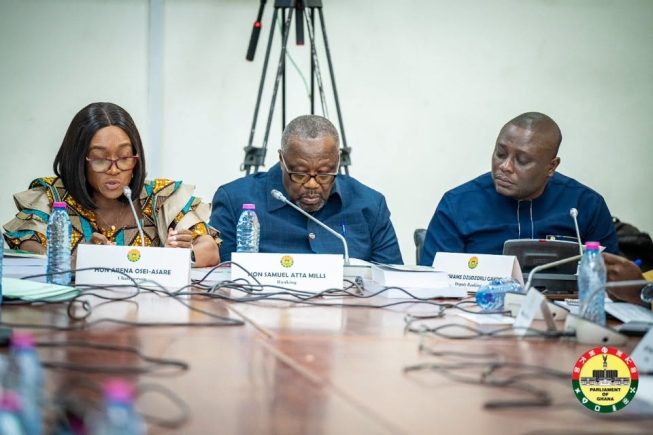
The Public Accounts Committee (PAC) has questioned the Central Regional Coordinating Council over payment vouchers totalling GH¢14.88 million that were processed outside the Ghana Integrated Financial Management Information System (GIFMIS).

The Committee has warned the council that if the same breach is identified in a subsequent audit, it will regard it as evidence that the institution failed to implement the corrective measures it said it had introduced.

The issue came up at the Committee’s sitting on Tuesday, October 6, 2026, when it considered the Auditor-General’s 2025 report on Ministries, Departments and other Agencies.

According to the audit finding presented to the Committee, the Central Regional Coordinating Council failed to process payment vouchers totalling GH¢14,882,540.98 through GIFMIS.

A representative of the Ministry of Local Government, Chieftaincy and Religious Affairs told the Committee that the transactions involved donor funds and were subsequently captured through journal vouchers.

He said subsequent transactions had been processed through GIFMIS after the audit observation was raised.

The explanation prompted further questions from the Committee about why the transactions had initially been processed outside the system.

A Committee member questioned whether the fact that the funds were donor-funded justified their exclusion from GIFMIS, stressing that donor funds were still public funds.

The representative later explained that the funds formed part of the approved budget and that the donor components had been captured during the budget process.

He said the problem arose because, when the releases were made, there was an issue with the budget code required to process the transactions through GIFMIS.

According to him, journal vouchers were subsequently raised to capture the transactions on the system and ensure that the accounts accurately reflected the expenditure.

The Committee continued to question the representative over the reasons the transactions had not initially been processed through GIFMIS.

The Chairperson of the Committee, Abena Osei-Asare, said the concern was not only about the transactions already identified but also whether the system had since been corrected.

She warned that if the same problem appeared in a future audit, the Committee would regard it as evidence that the institution had failed to implement the corrective system it claimed to have introduced.

“If we find this, then clearly we will know that you failed to learn or you failed to implement the system that you are telling us you have implemented,” she said.

The warning followed the Chairperson’s position at the opening of the 2025 audit hearings that institutions must show what had changed after previous audit findings instead of repeatedly appearing before the Committee with explanations for the same weaknesses.

She said the Committee would distinguish between administrative infractions and actual financial losses, while requiring institutions to show whether audit recommendations had been implemented and weak systems corrected.

The representative of the Central Regional Coordinating Council maintained that subsequent transactions had been processed through GIFMIS and that journal vouchers had been used to capture the earlier transactions that had not gone through the system.

Read at Graphic Online →
Ghana · Legislation

Mission school proposals address religious freedom and education

Mission school proposals address religious freedom and education

The Christian Council of Ghana has supported stronger protection against religious discrimination in mission-school admissions, boarding, discipline, student leadership and activities, while seeking preservation of institutional religious identity. Its representations at a forum on Constitutional Review Committee proposals referenced the education and religious freedom guarantees in Articles 25 and 21 of the Constitution. The Council acknowledged that publicly funded mission schools must uphold constitutional rights. These are reform representations, not enacted changes, but they identify issues for counsel reviewing school policies and advising on accommodation disputes.

The Christian Council of Ghana (CCG) has called for reforms to protect students’ religious freedoms while preserving the legitimate ethos of mission-founded schools.‎

‎The Council said the reforms should safeguard freedom of thought, conscience, belief and religion without undermining the right to education or the identity of mission-founded institutions.‎

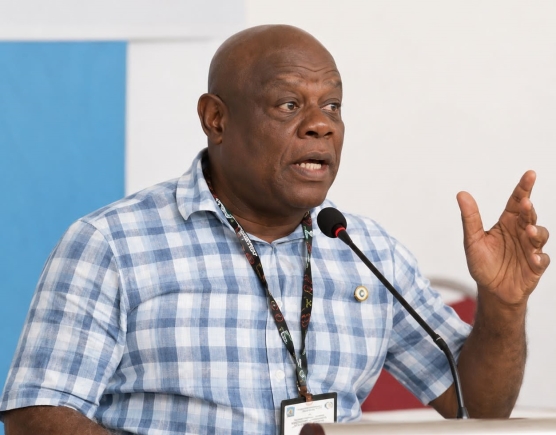
‎The Most Rev. Dr Paul Kwabena Boafo, Immediate Past Presiding Bishop of The Methodist Church Ghana, made the call at an Institute of Economic Affairs (IEA) forum in Accra on proposals in the Constitutional Review Committee’s report.

‎He said Article 25 of the 1992 Constitution guaranteed the right to education, while Article 21 guaranteed freedom of thought, conscience, belief and religion.‎

‎The Most Rev. Dr Boafo said mission schools had contributed significantly to Ghana’s educational development, particularly in promoting literacy and civic formation, but as publicly funded institutions, they were required to uphold constitutional guarantees.‎

‎He said the CCG welcomed the CRC’s proposal to strengthen protection against religious discrimination in admission, boarding, discipline, student leadership and participation in school activities.‎

‎The Most Rev. Dr Boafo said educational institutions should, however, be allowed to maintain their distinctive religious character and practices, provided these did not infringe students’ constitutional rights.

‎He said the Council supported education as a national development priority and urged clear constitutional rules governing the relationship between religious freedom and education.

Read at MyJoyOnline →
Ghana / Zambia · Region

Zambia arrests prompt warning over coerced cybercrime recruitment

Zambia arrests prompt warning over coerced cybercrime recruitment

Ghana's Foreign Ministry has issued an advisory following the arrest of six Ghanaians in a joint cybercrime operation in Lusaka. Reports received by the Ghana High Commission describe purported employment offers followed by passport confiscation and forced participation in online scams. The development raises potential trafficking and coercion issues alongside criminal and immigration exposure, without establishing the circumstances of each detainee. Lawyers assisting affected nationals should investigate recruitment and coercion evidence and coordinate with Zambian counsel and consular officials.

The Ministry of Foreign Affairs has issued a travel advisory warning Ghanaians seeking employment in Zambia to exercise extreme caution, following the arrest of six Ghanaians in Lusaka during a joint operation targeting organised cybercrime.

In a statement issued on October 5, the Ministry said it has observed with concern the emerging trend of Ghanaians being lured to Zambia through fraudulent employment opportunities and subsequently subjected to coercive conditions and forced involvement in cybercrime activities.

The operation, conducted by the Zambia Police Service, the Drug Enforcement Commission, and the Department of Immigration on 23 August 2026, targeted a facility suspected of being involved in organised cybercrime activities. It resulted in the arrest of 79 individuals, comprising ten Zambians and 69 foreign nationals, including the six Ghanaians.

It said reports received by the Ghana High Commission in Lusaka indicate that some individuals had been recruited through purported legitimate employment opportunities, including online data-entry positions, but were subsequently forced into online scam activities after their passports were confiscated by their employers.

The Ministry said the situation highlights the growing use of fraudulent employment opportunities by human trafficking syndicates to lure unsuspecting job seekers into illicit activities.

It advised Ghanaians travelling to or seeking employment opportunities in Zambia to thoroughly verify the authenticity of employment offers, recruitment agencies, and prospective employers before travelling.

Ghanaians living in Zambia are also urged to remain vigilant, exercise caution when responding to online employment opportunities, and maintain regular contact with the Ghana High Commission in Lusaka for consular assistance if the need arises.

The Ministry reiterated government's commitment to safeguarding the welfare and interests of Ghanaians travelling to or residing abroad.

Read at Graphic Online →