§ Briefing, Thursday, 8 October 2026

Regional bench renewed as representation reform remains pending

Five new ECOWAS judges take office, while Ghana’s parliamentary representation proposals remain under development. Domestic reports also raise professional representation litigation and banking compliance issues.

ECOWAS · Region

Five judges sworn into ECOWAS Community Court

Five judges sworn into ECOWAS Community Court

Five judges from Benin, The Gambia, Liberia, Nigeria and Togo have been sworn into the ECOWAS Community Court of Justice for four-year terms. The appointments renew the bench of a regional court whose application of Community law and protection of rights matter to Ghanaian practitioners. Counsel conducting regional litigation should monitor the Court’s subsequent notices on judicial composition and case allocation.

ECOWAS Chairman Bassirou Diomaye Faye has sworn in five new judges of the Community Court of Justice, charging them to uphold impartiality and public confidence.

The judges are Mr Désiré Henri Aihou of Benin, Justice Awa Bah of The Gambia, Mrs Charlyne M. Brumskine of Liberia, Mrs Henrietta Uzoamaka Didigu of Nigeria and Dr Yaouza Ouro-Sama of Togo.

President Faye, who administered the oath at the ECOWAS Commission in Abuja, said the judges were assuming office at a time the region faced political, economic, security and environmental challenges.

He said the Court had a key responsibility to ensure fairness in the application of ECOWAS legal instruments, protect citizens’ rights and strengthen confidence in regional institutions.

“Through its decisions, it protects rights, serves as a reminder of everyone’s obligations, and strengthens trust in our institutions,” he said.

President Faye urged the judges to let their oath guide them throughout their four-year tenure, particularly in determining cases before the Court.

He charged them to administer justice fairly, consider cases according to their conscience and perform their duties impartially without yielding to pressure from any quarter.

“That is why I urge you, throughout the duration of your mandate, to constantly keep in mind -especially at the moment of decision-making—the foundation of your oath,” he said.

He said the Court’s credibility would depend on the quality of its decisions and the confidence they inspired among citizens.

General Birame Diop, ECOWAS Commission President, described the ceremony as a commitment by the new judges to the citizens of the Community and its common legal order.

He said the oath required them to put aside personal interests and external influences and uphold community law with honour, loyalty, impartiality and conscience.

“The oath marks the moment when the individual sets aside their personal interests and all external influences to serve only community law,” he said, adding that the ceremony also reflected member states’ recognition of the Court’s authority and their commitment to respecting its independence.

The five judges were appointed for a non-renewable four-year term by the ECOWAS Authority of Heads of State and Government at its 69th Ordinary Session in Lungi, Sierra Leone, on July 19, 2026.

Their appointment was pursuant to the December 2025 Supplementary Act SA.1/12/25 on the Community Court of Justice.

The new judges succeeded Justice Ricardo Cláudio Monteiro Gonçalves of Cape Verde, Justice Sengu Mohamed Koroma of Sierra Leone, Justice Dupe Atoki of Nigeria, Justice Gberi-Bè Ouattara of Côte d’Ivoire and Justice Edward Amoako Asante of Ghana, whose four-year tenure had ended.


Read at MyJoyOnline →
Ghana · Profession

Challenge to GBA representation provisions remains before Supreme Court

Challenge to GBA representation provisions remains before Supreme Court

Rockson-Nelson Dafeamekpor is reported to be pursuing a Supreme Court challenge to the Ghana Bar Association’s claim to exclusive representation on certain statutory bodies. His argument links constitutional references to the GBA with the guarantee of freedom of association; the report identifies no ruling or fresh procedural order. The proceedings warrant attention because their outcome could affect professional representation, but his interpretation should not be treated as settled law.

The Ghana Law Society (GLS) says its emergence is intended to provide an additional platform for lawyers, particularly in addressing members’ welfare, rather than to compete with the Ghana Bar Association (GBA).

The society is developing a welfare package under which 20 per cent of members’ dues would be set aside to finance a life insurance policy. The initiative is part of what the GLS sees as a stronger focus on the professional and personal welfare needs of its members.

The development comes as Majority Chief Whip Rockson-Nelson Dafeamekpor pursues a Supreme Court case challenging the legal basis of the GBA’s claim to exclusive representation on certain statutory bodies.

He has stressed that the case does not seek to question the existence or relevance of the GBA, but rather the interpretation of constitutional provisions that specifically refer to the association.

Mr Dafeamekpor has argued that references to the GBA in the 1992 Constitution should not be interpreted as giving the association exclusive representation, saying such provisions should also be read alongside the constitutional guarantee of freedom of association.

Speaking in an interview with Channel One TV on Wednesday, October 7, Mr Dafeamekpor said the GLS was not positioning itself as a rival to the GBA, insisting that its priority was the welfare of its members.

“We’re not in competition with the Ghana Bar Association. I’m saying that as a law society, our focus has been on the welfare of our members, which the GBA doesn’t do,” he said.

He also called for tolerance of differing political views among lawyers, saying the GLS would not adopt an anti-NPP posture simply because some of its members belong to the party.

“We are lawyers. We should be tolerant of opposing views. That’s our training,” he said.

The Ghana Law Society was inaugurated on September 30, 2026, during its maiden bar conference.

Read at MyJoyOnline →
Ghana · Legislation

Disability federation backs proposed parliamentary representation reform

Disability federation backs proposed parliamentary representation reform

The Ghana Federation of Disability Organisations has endorsed a government proposal to add 24 proportional representation seats to the existing 276 constituency seats. The proposed component is intended to improve representation of women, young people and persons with disabilities, with an independent study expected to inform its design. This remains a constitutional reform proposal, not an enacted change, and the report identifies no implementing bill. Practitioners should await the formal text before assessing eligibility, allocation rules and the required amendment procedure.

The Ghana Federation of Disability Organisations (GFD) has backed a proposal to increase the membership of Parliament from the existing 276 to 300, with 24 additional seats allocated through proportional representation to increase the representation of women, young people and persons with disabilities (PWDs).

The proposal forms part of the Government’s response to recommendations of the Constitution Review Committee (CRC), which was appointed in 2025 to undertake a comprehensive review of the 1992 Constitution.

The Government has proposed that the 276 existing constituency seats be retained, while the additional 24 seats would be filled through a proportional representation arrangement involving women, PWDs and young people.

It proposed that Parliament be capped at 276 elected members, while separately endorsing proportional representation as a means of creating greater opportunities for women, youth, other politically marginalised groups and smaller political parties to gain representation.

It recommended an independent study to determine the suitability and design of proportional representation for Ghana.

The Government’s proposal would, therefore, retain the current first-past-the-post constituency system while creating a separate proportional representation component.

The Government has said an independent study would be commissioned to determine how that component would be designed.

The GFD stated its position on the proposal at a press conference attended by representatives of disability organisations and the media to examine ways of improving political participation and representation for marginalised groups.

The proposed arrangement would give groups that face barriers to entering Parliament greater opportunities to participate directly in law-making and national decision-making.

The former President of the GFD and disability rights activist, Yaw Ofori Debrah, said the organisation had advocated greater representation of PWDs and other underrepresented groups in Parliament for years.

He recalled that the GFD first presented its case to the Constitutional Review Committee around 2013/2014, arguing that historically underrepresented groups needed a stronger voice in Parliament.

The Chairperson of the GFD National Advocacy Committee, Alex Williams, said the current electoral system did not automatically guarantee representation for groups facing barriers such as campaign financing, political networks, accessibility and social attitudes.

He said the proposed arrangement would enable PWDs and other marginalised groups to participate more directly in law-making, parliamentary oversight and national policy decisions.

Mr Williams cited Uganda, Kenya, Rwanda and Zimbabwe as examples of countries that had adopted various forms of reserved or proportional representation to improve the participation of underrepresented groups in their legislatures.

The Executive Director of the Ghana National Association of the Deaf (GNAD), Juventus Duorinaah, called for safeguards to ensure that the proposed system was implemented fairly and inclusively.

He said the GFD had made nine recommendations to the government, including a transparent selection process, gender balance, a clear definition of “youth”, accessible information, adequate funding and the full involvement of PWDs in consultations.

Read at Graphic Online →
Ghana · Regulation

GoldBod begins foreign exchange auctions under new framework

GoldBod begins foreign exchange auctions under new framework

GoldBod reportedly sold approximately US$125 million to commercial banks in its first auction under a new spot foreign exchange sales and intermediation framework. Participating banks must declare actual unmet customer demand or evidence of a short position and comply with Bank of Ghana regulations and directives. The reported framework provides for pro-rata allocation when demand exceeds supply and specified settlement deadlines. Banking counsel should obtain the operative terms to assess declaration, allocation and settlement obligations rather than rely solely on the report.

The Ghana Gold Board (GoldBod) has sold approximately US$125 million to commercial banks in its maiden foreign exchange auction under its new spot FX sales and intermediation framework.

JOYBUSINESS understands that the auction was conducted on Tuesday as part of efforts to strengthen transparency, fairness and regulatory compliance in the foreign exchange market.

The auction forms part of GoldBod’s plan to provide commercial banks with more predictable and transparent access to US dollars through its GoldBod GoFX platform.

GoldBod earlier announced plans to sell US$1 billion to commercial banks during the month to support stability in the foreign exchange market.

The GoldBod programme is expected to generate about US$1.5 billion in total.

Of this amount, US$1 billion will be sold to commercial banks, while the remaining US$500 million will be advanced to the Bank of Ghana to support the accumulation of foreign exchange reserves.

Under the new framework, GoldBod will conduct foreign exchange sales twice a week, on Tuesdays and Thursdays.

Participating banks will submit their requests during a designated sales window.

Where demand exceeds the available FX tranche, GoldBod said allocations will be made on a pro-rata basis to ensure a transparent and equitable distribution of the available foreign exchange.

The US dollar leg will be completed by 3:00pm, while the Ghana cedi leg will be completed by 4:00pm.

GoldBod said participating banks will be required to declare that their requests are backed by actual unmet foreign exchange demand or evidence of a short position.

The banks will also be required to comply with Bank of Ghana regulations and directives.

The measures are intended to ensure that the facility responds to genuine market demand and is not used for speculative purposes.

The programme will operate under the regulatory oversight of the Bank of Ghana.

GoldBod said the central bank will have real-time access to the GoldBod GoFX platform.

GoldBod will also submit transaction reports to the Bank of Ghana after each sale.

The GoFX platform provides electronic submission and allocation processing, as well as time-stamping, transaction histories and audit trails.

According to GoldBod, these features are designed to strengthen transparency, accountability and post-trade verification.

The details were provided at a meeting between GoldBod and commercial banks ahead of the rollout of the new Spot FX Sales and Intermediation Framework.

The framework is expected to provide authorised commercial banks with predictable and transparent access to US dollars through the GoldBod GoFX platform.

Read at MyJoyOnline →
Ghana · Regulation

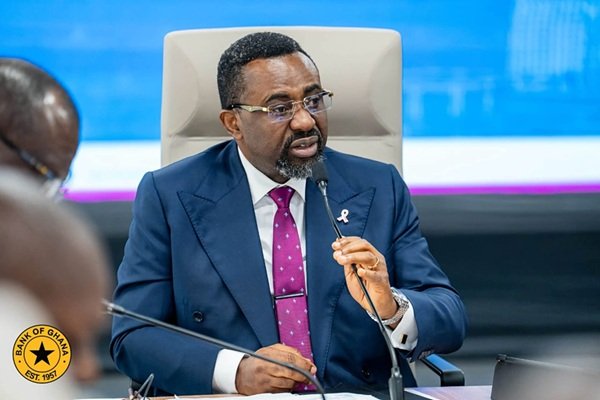
Bank of Ghana warns against recirculating repaired banknotes

Bank of Ghana warns against recirculating repaired banknotes

The Bank of Ghana has warned against taping, gluing, stapling or otherwise repairing mutilated cedi notes for recirculation. Its statement directs holders to commercial banks for examination and replacement under established procedures, stating that more than half of the original note must be presented. The guidance matters to banks and cash-handling businesses reviewing acceptance and replacement procedures. The report identifies no new legislative instrument or penalty.

Menu Search for Switch skin Home News Politics Business Sports Crime Africa More World Education Editorial Features Lifestyle Technology Gallery Contact Us Facebook X TikTok RSS Switch skin Search for Hot! News Bank of Ghana warns public against repairing torn Cedi notes with adhesive tape October 7, 2026 1 minute read The Bank of Ghana has warned the public to desist from repairing and re-joining torn and soiled Ghana Cedi banknotes with adhesive tape for re-circulation.

In a statement issued on WednesdayOctober 7, the Central Bank said its attention has been drawn to a video circulating on social media in which individuals are seen repairing mutilated Cedi notes as a business activity.

The Bank cautioned that the practice undermines the integrity of the currency.

“The Ghana Cedi banknote is legal tender and an important national symbol. No person should engage in the repair, re-joining or other alteration of mutilated banknotes for re-issuance or recirculation,” the statement said.

According to the Bank, notes that have been taped, glued, stapled or otherwise improperly repaired are unfit for circulation. It warned that such notes could damage Automated Teller Machines (ATMs) and currency processing machines and may be rejected when presented for payment, resulting in financial loss.

The Bank of Ghana reminded the public that it has the sole mandate for managing Ghana’s currency. It advised persons in possession of mutilated notes to present them to any commercial bank for examination and replacement, in accordance with laid-down procedures.

It added that where a mutilated note is presented, more than half of the original note must be presented.

The public is therefore advised not to tape, glue, staple or re-join damaged banknotes, but to take them to a commercial bank for proper handling.

The Bank further urged the public to handle Cedi notes with care and to report anyone engaged in the improper repair or mutilation of banknotes to the Bank of Ghana or law enforcement agencies.

“Respect the Cedi. It is our National Pride,” the Bank stressed.

Read at Ghanaian Times →
Ghana · Procedure

CLOGSAG appointments disputed in High Court proceedings

CLOGSAG appointments disputed in High Court proceedings

CLOGSAG’s Acting President has asked regional and district executives not to implement disputed appointments while their validity awaits High Court determination. The report attributes that direction to the association’s office, not to a judicial injunction or stay. Counsel advising affected officers should inspect the pleadings and any court orders before determining the legal effect of the appointments or the instruction to disregard them.

The Office of the Acting President of the Civil and Local Government Staff Association of Ghana (CLOGSAG) has cautioned members against implementing purported new appointments being circulated within the association, stating that the matter is currently before the High Court for determination.

In a press release issued on Tuesday, October 6, 2026, the Acting President, Mr Benjamin Otoo, said the purported appointments are disputed, and their validity is awaiting a court ruling. The High Court has scheduled a date to determine the matter.

"Accordingly, all Regional Executives, District Executives and members are urged to disregard and refrain from implementing any notices, directives or administrative actions arising from the purported appointments until the Court has pronounced on the matter," the statement said.

The association further directed that Regional and District Executives should not recognise or implement the disputed appointments pending the court's determination.

All members were urged to remain calm, law-abiding and committed to protecting the unity and institutional integrity of the association.

The Office of the Acting President said it remains committed to protecting the institutional integrity, property and collective interests of the association, and called on all stakeholders to exercise restraint and respect the judicial process.

The statement was signed by Mr Benjamin Otoo, Acting President of the association.

Read at Graphic Online →