§ Briefing, Sunday, 11 October 2026

SkyTrain proceedings deferred; disability law amendment announced

The SkyTrain trial’s case management conference has been adjourned amid a Supreme Court challenge. Other developments concern proposed disability legislation, banking capital compliance and enforcement capacity for housing and trafficking protections.

Ghana · Procedure

SkyTrain case management conference adjourned to October 19

SkyTrain case management conference adjourned to October 19

The Accra High Court adjourned the SkyTrain case management conference to October 19, 2026, following submissions concerning Solomon Asamoah’s pending Supreme Court application for certiorari and prohibition. Counsel said the application, which seeks to restrain further trial proceedings, was returnable on October 13; the report also records that an interlocutory injunction had been refused. The prosecution has closed its case, and both accused deny charges concerning an allegedly unauthorised $2 million GIIF payment. Practitioners should distinguish the High Court’s adjournment from any Supreme Court order staying proceedings.

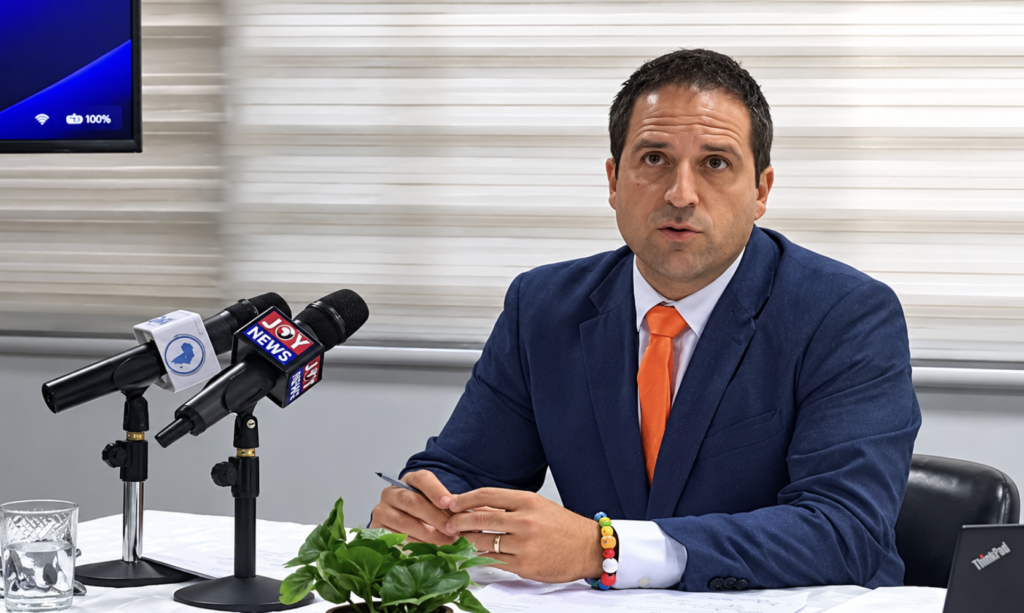
The Accra High Court has adjourned the case management conference (CMC) in the $2 million SkyTrain trial to October 19, 2026, after counsel for the first accused, Solomon Asamoah, prayed the court to allow the Supreme Court to determine his application seeking to halt the trial.

The court, presided over by Justice Audrey Kocuvie-Tay, adjourned the case to the new date after hearing submissions from counsel for the accused persons and the prosecution.

The CMC, which was scheduled to run from October 5 to 7, 2026, was expected to pave the way for the accused persons to open their defence after the prosecution closed its case.

Mr Asamoah and Professor Christopher Ameyaw-Akumfi are standing trial over an alleged $2 million payment by the Ghana Infrastructure Investment Fund (GIIF) in connection with the proposed Accra SkyTrain project, which was never constructed.

The prosecution alleges that the money was transferred from GIIF's account to Africa Investor Holdings Limited, a South African company, without the requisite approval of the GIIF Board.

The two accused persons have pleaded not guilty to the charges.

At the court hearing, counsel for Mr Asamoah, Victoria Barth, told the court that her client had invoked the supervisory jurisdiction of the Supreme Court in respect of the trial.

She said the application was for orders of certiorari and prohibition, including an order restraining the High Court from further hearing, continuing with or determining the case.

According to her, the return date for the application was October 13, 2026, and any further step in the trial before that date could compromise the application before the Supreme Court.

She said although the Supreme Court had refused Mr Asamoah's application for an interlocutory injunction to halt the trial, her client had demonstrated good faith by filing his witness statement on September 23, 2026.

She added that 14 subpoenas were subsequently filed on October 2, 2026, in respect of persons Mr Asamoah intended to cross-examine as part of his defence, depending on the outcome of the application before the Supreme Court.

“We are praying the court to take into consideration the fact that the return date for the prohibition application is Tuesday, October 13, and therefore to kindly grant us a short adjournment for the Supreme Court to hear us,” she said.

Ms Barth further told the court that two persons who were outside the jurisdiction or presently unavailable to the defence were expected to provide witness statements, subject to the court's leave.

Counsel for the second accused, Prof. Christopher Ameyaw-Akumfi, Yaw Acheampong Boafo, associated himself with the submissions of Ms Barth.
Read at Graphic Online →
Ghana · Legislation

President announces proposed amendment of disability legislation

President announces proposed amendment of disability legislation

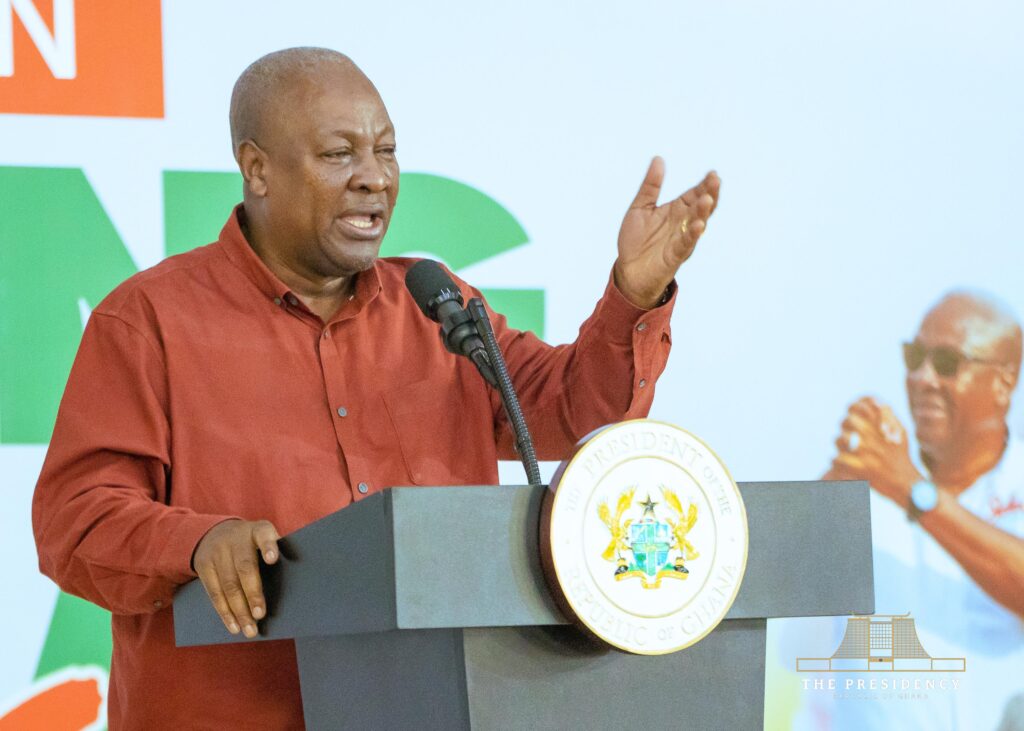
President Mahama announced that the Persons with Disability Act, 2006 (Act 715), would be amended to improve conditions for persons with disabilities. He also said their allocation from the District Assemblies Common Fund had increased from three to five per cent. The report supplies neither amendment text nor a parliamentary timetable, so the announcement should not be treated as a change to existing statutory rights. Counsel advising on disability rights and public funding should monitor the proposed provisions and the instruments governing implementation.

President John Dramani Mahama has announced plans by the government to import rechargeable electric wheelchairs for persons with disabilities (PWDs).

He explained that the pilot project was intended to facilitate the mobility of PWDs and said the wheelchairs would be handed over to the National Council on Persons with Disability upon arrival.

The President made the announcement during a citizens’ engagement in Goaso at the end of his two-day Resetting Ghana Tour of the Ahafo Region.

He said the initiative would be replicated annually if the pilot project proved successful.

President Mahama said the allocation from the District Assemblies Common Fund (DACF) for persons with disabilities had been increased from three per cent to five per cent under his administration.

He also announced that the Persons with Disability Act, 2006 (Act 715), which seeks to protect and promote the rights of persons with disabilities, would be amended as part of efforts to improve their living conditions.

On health, President Mahama said the government had implemented the Free Primary Healthcare Programme to provide free healthcare services to the public.

He added that the Ghana Medical Trust Fund, also known as MahamaCares, had been established to reduce the financial burden of treating chronic diseases, including cancers and kidney disease requiring dialysis.

Read at MyJoyOnline →
Ghana · Regulation

Bank of Ghana reports restoration of capital compliance

Bank of Ghana reports restoration of capital compliance

The Bank of Ghana Governor reported that all 23 banks had met regulatory capital requirements, following restoration efforts after 13 banks recorded breaches in their 2022 audited financial statements. He put the sector’s capital adequacy ratio at 19.10 per cent in August 2026, against a regulatory minimum of 13 per cent. He also referred to a 2025 supervisory review of banks’ business-model sustainability and cautioned that capital restoration alone did not secure long-term stability. Banking counsel should distinguish this sector-wide compliance update from any new regulatory requirement and continue to examine institution-specific supervisory obligations.

Total assets of Ghana’s banking sector increased by 20.47 per cent to GH¢500.20 billion at the end of August 2026.

The figure is an increase from w GH¢415.20 billion recorded in 2025, Dr Johnson Pandit Asiama, Governor of the Bank of Ghana (BoG), has said.

He said the growth reflected improvements in the banking sector, supported by better macroeconomic conditions and regulatory and supervisory reforms undertaken by the central bank.

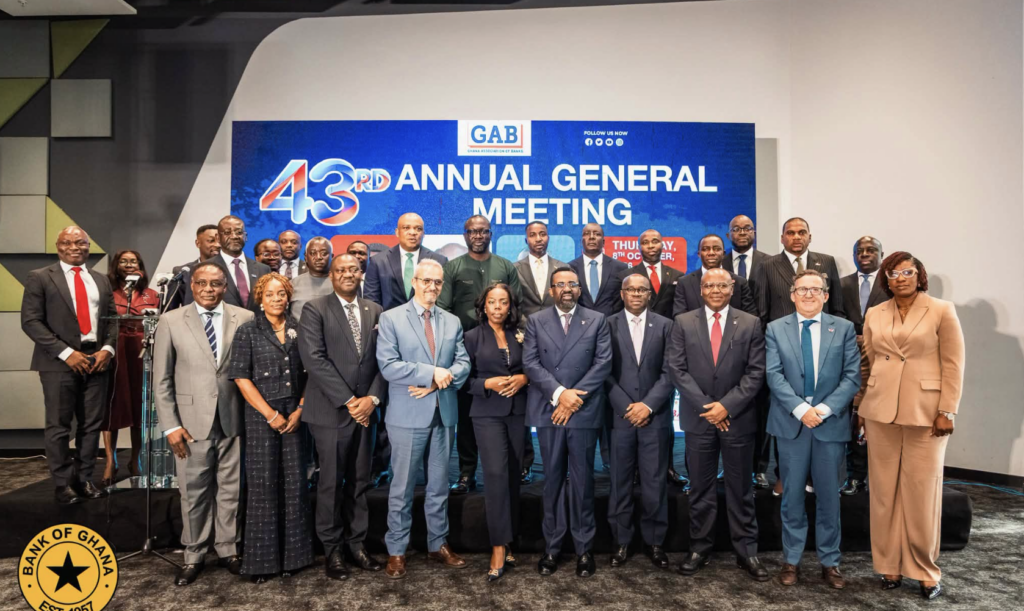
Speaking at the 43rd Annual General Meeting of the Ghana Association of Banks in Accra on Thursday, Dr Asiama noted an improvement in the sector’s Capital Adequacy Ratio from 18.28 per cent in August 2025 to 19.10 per cent in August 2026, significantly above the regulatory minimum of 13 per cent.

Asset quality had also improved, with the Non-Performing Loans (NPL) ratio declining from 20.77 per cent in August 2025 to 15.66 per cent in August 2026.

Dr Asiama said all 23 banks operating in the country had met regulatory capital requirements, following capital restoration efforts after the economic crisis and financial asset impairments associated with the Domestic Debt Exchange Programme (DDEP).

He said 13 banks had breached regulatory capital requirements in their 2022 audited financial statements, but efforts involving banks, shareholders, investors, the Government and the BoG had helped restore compliance across the sector.

The Governor, however, cautioned that capital restoration alone was insufficient to guarantee long-term stability, urging banks to strengthen their business models, risk management and capacity to withstand future economic shocks.

He said the Bank undertook a comprehensive thematic review of the viability and long-term sustainability of banks’ business models in 2025, with vulnerabilities identified shared with the respective institutions.

Engagements with the boards and senior management of the affected banks had commenced, while a second round of Business Model Analysis was planned for 2027.

Dr Asiama said the reviews were intended to ensure that banks maintained sustainable business models and adequately identified, measured, monitored and managed risks embedded in their operations.

He also reminded them of the requirement to reduce their NPL ratios to the prudential limit of 10 per cent by the end of December 2026.

The Governor said the central bank would continue to strengthen its regulatory and supervisory frameworks to preserve the gains made by the banking sector and ensure that stronger balance sheets translated into sustainable operations and greater support for productive economic activity.

Read at MyJoyOnline →
Ghana · Regulation

UN housing expert calls for stronger rent enforcement capacity

UN housing expert calls for stronger rent enforcement capacity

Following a 12-day official visit, the UN Special Rapporteur on adequate housing called for better logistical support for the Rent Control Department and stronger monitoring of arbitrary rent increases. His statement linked housing unaffordability to informal settlement growth and urged consultation with people living in poverty. These are recommendations rather than binding changes to rent regulation. For landlord-and-tenant practitioners, the development highlights enforcement capacity and access to remedies as issues to monitor alongside any subsequent government response.

The United Nations (UN) Special Rapporteur on the right to adequate housing has advised Ghana to support its Rent Control Department with the requisite logistics to boost operations.

Koldo Casla said the Government should also ensure that all relevant institutional mechanisms were strengthened for effective monitoring to curb arbitrary rent increases that did not bode well for tenants.

A statement copied to the Ghana News Agency by the UN Special Rapporteur at the weekend observed that unaffordability of formally built housing had left many Ghanaians with no choice but to find their way into informal settlements.

The statement, which highlighted his conclusion of a 12-day official visit to Ghana, said: “During the visit, I observed the housing construction and physical transformations taking place primarily in Accra.”

“I could see flashy billboards around the capital promoting real estate investments at stratospheric prices far from the reach of the average Ghanaian.”

The statement said it was important the authorities realised that general unaffordability of formally built housing had left many Ghanaians with no choice but to find their way into informal settlements.

“About 31 per cent of the urban population lives in informal settlements,” it said, adding that a considerable number of the citizens were also homeless.

The statement encouraged the authorities to actively listen to the needs of people living in poverty in the design of public policies regarding housing.

“Construction is one of the leading industries and fastest growing sectors in Ghana, employing hundreds of thousands of people, with an estimated contribution ranging between seven and 15 per cent of the country’s Gross Domestic Product,” it said.

Read at MyJoyOnline →
Ghana · Profession

Anti-trafficking gains accompanied by survivor-support concerns

Anti-trafficking gains accompanied by survivor-support concerns

International Justice Mission Ghana welcomed Ghana’s reported elevation to Tier 1 in the 2026 US Trafficking in Persons Report but called for increased funding for child protection and survivor support. Its statement cited 212 alleged traffickers prosecuted, 28 convictions and 2,331 victims identified and referred to services during the reporting period. Limited shelter capacity and continuing exploitation remain material concerns for lawyers assisting survivors and coordinating protection referrals. The assessment does not alter domestic law or establish that individual victims can obtain adequate support.

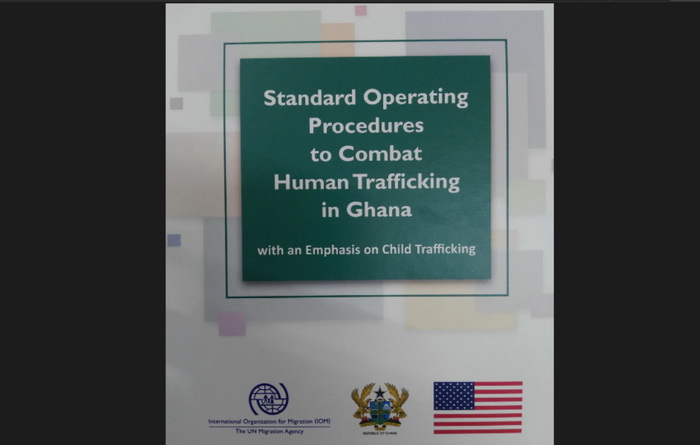
International Justice Mission (IJM) Ghana has called for increased funding for child protection and survivor support services, warning that limited shelter capacity and continuing child exploitation remain major challenges despite Ghana’s upgrade to Tier 1 in the 2026 United States’ Trafficking in Persons (TIP) Report.

The organisation, that protects the Vulnerable and people living in poverty from violence and exploitation, said the improvement in Ghana’s anti-trafficking performance should prompt greater investment in frontline institutions, survivor care and efforts to prevent the exploitation of vulnerable children and adults.

In a press statement issued on Friday, October 9, 2026, IJM Ghana congratulated the government and other stakeholders on the reported elevation from Tier 2 to Tier 1 in the US Department of State’s annual assessment of countries’ efforts to combat human trafficking.

IJM Ghana’s Director of West Africa Programme, Anita Budu, said the achievement reflected coordinated action by government agencies, civil society organisations and development partners.

“Ghana’s elevation to Tier 1 status is a significant national achievement that reflects the power of coordinated action and collective commitment,” she said.

She, however, warned that children and vulnerable adults remained at risk of trafficking and exploitation, urging stakeholders to build on the reported progress to protect victims and hold offenders accountable.

According to the statement, Ghana prosecuted 212 alleged traffickers and secured 28 convictions during the reporting period. It also said authorities identified 2,331 trafficking victims and referred all of them to appropriate services.

The statement cited increased government funding for victim assistance and anti-trafficking initiatives, expanded training for frontline officers and stronger international cooperation among the measures contributing to the reported progress.

IJM Ghana commended the Ministry of Gender, Children and Social Protection, particularly the Human Trafficking Secretariat, for coordinating national anti-trafficking efforts. It also acknowledged the contributions of the Attorney-General’s Department, the Ghana Police Service, the Ghana Immigration Service and the Economic and Organised Crime Office.

Parliament, the National Commission for Civic Education, the media, civil society organisations, religious groups, traditional authorities and development partners were also recognised for their roles in public education, advocacy and victim support.

IJM Ghana said children continued to face risks of forced labour in fishing, domestic work, street hawking, agriculture, artisanal mining, quarrying and herding.

It identified child trafficking on Lake Volta as a significant concern and warned that traffickers were increasingly using technology, fraudulent job offers, online scams and deceptive migration opportunities to recruit and exploit victims.

The organisation said civil society groups remained important partners in providing shelter, supporting survivors, assisting investigations and educating communities about trafficking risks.

It called for stronger protection systems, more specialised training for law enforcement officers and improved services for survivors, particularly adults who require shelter and long-term support. IJM Ghana urged stakeholders not to regard the reported Tier 1 status as the end of the fight against trafficking but as a basis for further action.

The US Department of State’s 2026 Trafficking in Persons (TIP) Report said Ghana met the minimum standards for eliminating human trafficking under the US Trafficking Victims Protection Act.

Ghana’s previous ranking was Tier 2 in the 2025 US Trafficking in Persons (TIP) Report. The country had maintained that ranking for seven consecutive years.

Tier 1 is the highest category in the assessment and signifies that a government is considered to be fully meeting the minimum standards for combating trafficking. However, the ranking does not mean that trafficking has been eradicated or that the country has no outstanding challenges.

Countries in Tier 1 were expected to demonstrate continued progress each year to maintain the status.

Writer's email This email address is being protected from spambots. You need JavaScript enabled to view it.

Read at Graphic Online →