§ Briefing, Monday, 12 October 2026

Bank liquidity consultation leads Ghana’s legal agenda

The Bank of Ghana seeks comments on proposed liquidity requirements by 30 November. Other developments concern bank capital compliance, health-data sharing negotiations and anti-trafficking enforcement.

Ghana · Regulation

Bank of Ghana consults on liquidity coverage directive
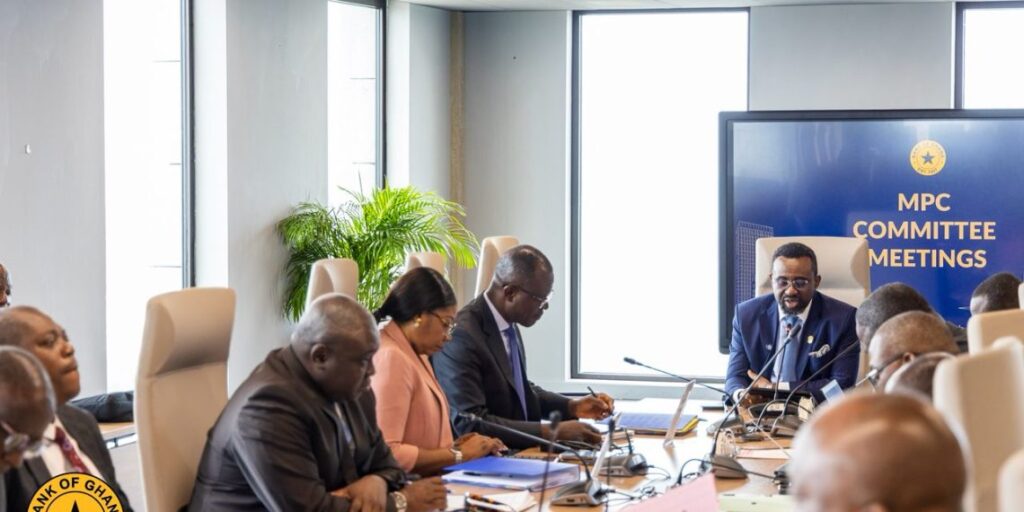
Bank of Ghana consults on liquidity coverage directive

The Bank of Ghana has invited comments on a proposed Liquidity Coverage Ratio Directive under its Procedures for Issuance of Directives, 2020. The proposal would require banks to hold adequate high-quality liquid assets to cover liquidity needs during 30 calendar days of significant financial stress. Banking practitioners should assess the draft’s implications for treasury arrangements and compliance systems, distinguishing the proposed framework from an operative requirement. Comments are due by 30 November 2026 at bsdletters@bog.gov.gh, and the Bank says it will explain in writing how material feedback was addressed.

The Bank of Ghana (BoG) is preparing to introduce a Liquidity Coverage Ratio (LCR) requirement for banks to strengthen their ability to meet short-term financial obligations during periods of significant market stress.

The central bank has invited banks, industry stakeholders and members of the public to submit comments on a proposed Liquidity Coverage Ratio Directive before it is finalised.

The consultation is being conducted in accordance with the BoG’s Procedures for Issuance of Directives, 2020.

Under the proposed framework, banks would be required to maintain adequate high-quality liquid assets to cover their liquidity needs over a 30-calendar-day period of significant financial stress.

The requirement is intended to help banks withstand sudden cash outflows and funding pressures without compromising their ability to meet obligations.

The proposed directive would establish a prudential benchmark for assessing banks’ liquidity buffers and resilience to financial shocks. It could also require banks to review their treasury operations, liquidity planning and the composition of assets held to meet regulatory requirements.

The BoG has set November 30, 2026, as the deadline for submissions. Comments are to be sent to bsdletters@bog.gov.gh .

The central bank says it will consider all material feedback received and provide written explanations indicating how the comments were addressed, including whether they were incorporated into the final directive.

The proposed liquidity requirement forms part of broader efforts by the Bank of Ghana to strengthen risk management across the banking sector, including measures targeting credit risk and non-performing loans.

The central bank has also outlined a Credit Risk Management Directive intended to complement the Non-Performing Loan Notice issued last year.

The proposed framework is expected to cover the entire lending process, from credit origination and administration to monitoring, measurement and recovery.

While the credit-risk measures focus on how banks assess and manage lending exposures, the LCR requirement is designed to ensure they have sufficient liquid assets to meet short-term obligations during periods of financial stress.

Together, the proposed measures would address two key areas of banking-sector resilience: the management of credit portfolios and the capacity to withstand liquidity pressures.

The consultation period will allow stakeholders to raise implementation concerns and recommend adjustments before the liquidity directive is finalised.

Read at MyJoyOnline →
Ghana · Regulation

Governor reports all banks meet regulatory capital requirements

Governor reports all banks meet regulatory capital requirements

The Bank of Ghana Governor has reported that all 23 banks now meet regulatory capital requirements, following breaches identified in the 2022 audited financial statements of 13 banks. He nevertheless emphasised the need for capital proportionate to individual risk profiles and buffers against future shocks. For banking counsel, this is a supervisory update rather than a relaxation of prudential obligations, and institution-specific compliance remains material to transaction due diligence.

Search Watch live Home News Politics Business Sports Entertainment Opinion Videos More Banking Ghana’s banking assets hit GH¢500.2bn as all 23 banks meet capital requirements All 23 banks in Ghana now meet regulatory capital requirements, Governor Asiama says, as the Bank of Ghana turns to resilience, liquidity and cyber risk.

Copy link Add 3News as your preferred source on Google Preferred source After the economic crisis pushed 13 banks below regulatory capital limits, Ghana’s banking sector is back on solid ground, with the Bank of Ghana confirming that all 23 banks now comply.

Governor Dr Johnson Pandit Asiama announced the milestone at the 43rd Annual General Meeting of the Ghana Association of Banks in Accra on Thursday, 8 October 2026, where the sixth edition of the GH Bankers’ Voice Magazine was launched.

The breaches, he recalled, were revealed by the 2022 audited financial statements and were linked to the crisis and the impairment of financial assets, following the Domestic Debt Exchange Programme.

“This is a significant achievement,” Dr Asiama said, crediting banks, shareholders, investors, the Association, the government, and the central bank.

The sector’s numbers have improved since 2025, the Governor said, helped by better macroeconomic conditions and continued regulatory reforms. By the end of August 2026, total banking assets had grown 20.47 per cent year-on-year to GH¢500.20 billion, from GH¢415.20 billion.

Dr Asiama stressed that meeting the minimum was only a start. Banks must hold capital matching their risk profiles and build buffers for future shocks, he said, because the risks they face are becoming more complex.

The Bank reviewed the sustainability of banks’ business models in 2025, and the vulnerabilities it found have been shared with the institutions. A second review is planned for next year.

The Governor said the Bank is preparing two directives. One, on credit risk management, will complement its notice on non-performing loans (NPLs) and push banks to strengthen underwriting, loan monitoring, restructuring, and recovery. The other, on the Liquidity Coverage Ratio, will set a prudential liquidity requirement.

He said the liquidity ratio should be part of a wider risk culture, backed by contingency funding and diversified funding sources.

The Bank has tightened its stress-testing framework. It is discussing the results, based on severe but plausible scenarios, with banks, which are expected to use them in capital and liquidity planning.

On technology, Dr Asiama said cybersecurity, digital fraud, data protection, and operational resilience are drawing supervisory attention. The Bank will review how banks are applying its revised Cyber and Information Security Directive, and he urged boards to treat cyber risk as a core business risk.

#5 Presidential Drive, Adesa We, Kanda, Greater Accra. Ghana

Read at 3News →
Ghana · Regulation

Ghana and United States revisit rejected health compact

Ghana and United States revisit rejected health compact

President Mahama says the United States has sought discussions to revise the health compact previously rejected by Ghana. He identified proposed sharing of national pathogen profiles and citizens’ private medical records as a principal concern. The negotiations matter to practitioners advising on medical confidentiality, data protection and cross-border health-data transfers, but the report establishes neither an agreed revision nor an operative disclosure obligation.

The United States is engaging Ghana to review the health compact agreement that was previously rejected by the Ghana government, President John Dramani Mahama has disclosed.

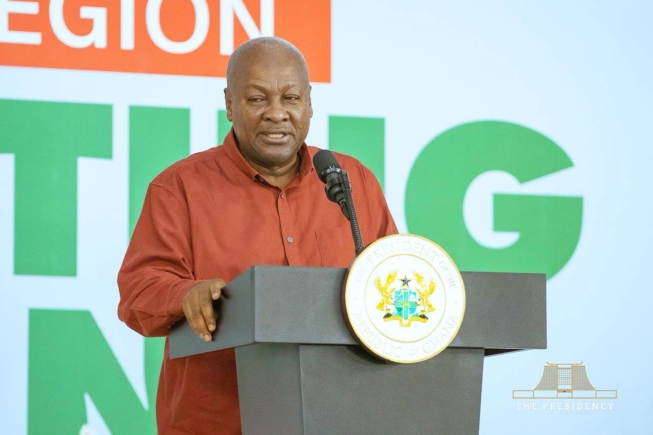
President Mahama made the disclosure in Goaso while responding to a question on the agreement during a Citizens’ Engagement held on the final day of his two-day Resetting Ghana Tour of the Ahafo Region.

He recalled that last month he outlined the reasons for Ghana’s rejection of the agreement during a speech at the Council on Foreign Relations in New York.

“I have spoken about it at the time I was in New York, however they have come again and they want us to sit down and review the agreement, so that things that we are not happy about they would either change them or remove them. So, there is a way for us to sit down with them and have a dialogue on it,” the President said.

According to the President, one of Ghana’s major concerns is a requirement under the health compact for the country to share national pathogen profiles and citizens’ private medical records with the United States.

He indicated that Ghana was not comfortable with those provisions of the agreement.

Read at Graphic Online →
Ghana · Region

US trafficking assessment upgrades Ghana to Tier 1

US trafficking assessment upgrades Ghana to Tier 1

According to the Gender Minister, the United States Department of State’s 2026 Trafficking in Persons Report places Ghana in Tier 1, recognising compliance with minimum standards for eliminating trafficking. The reported assessment records improvements in investigations, prosecutions and convictions, while identifying weaknesses involving online scams and fraudulent recruitment. These findings are relevant to practitioners handling trafficking cases and victim protection, but the classification does not amend domestic law or establish that trafficking has been eliminated.

Ghana has been upgraded to Tier 1 in the United States Department of State’s 2026 Trafficking in Persons Report.

The ranking, the highest in the United States of America’s assessment, reflects improvements in Ghana’s efforts to investigate trafficking cases, prosecute suspects and secure convictions.

The Tier 1 classification recognises countries assessed as meeting the minimum standards for eliminating human trafficking.

Dr Naa Momo Lartey, Ghana’s Gender Minister who announced this at the 3 rd quarter meeting of the Human Trafficking Management Board in Accra commended all partner institutions for the sterling efforts in moving Ghana to the Tier 1 ranking.

What it means is that Ghana has fully complied with the key indications required to reach such status and therefore could lobby for funding to undertake human trafficking operations.

Ms Abena Annobea Asare, Secretary to the Board who threw more light on the ranking said Ghana had been on the Tier 2 ranking for years and therefore the new ranking was a huge recognition.

However, the assessment identified some weaknesses in the country’s capacity to investigate trafficking linked to online scams and fraudulent recruitments, she maintained that it was a leverage to do more in that area.

She expressed optimism that the gaps identified would be worked on and have a robust system in human trafficking management adding that “this ranking is more deeper and goes beyond what we see.”

According to the report Ghana investigated 222 human trafficking cases in 2025, comprising 83 sex trafficking cases, 132 forced labour cases and seven cases involving unspecified forms of trafficking.

In the same period under review 212 suspected traffickers were prosecuted including 31 suspects in sex trafficking cases, 57 in forced labour cases and 124 in cases involving unspecified forms of trafficking. The courts secured 28 convictions, comprising 14 each for sex trafficking and forced labour, and these figures indicate an increase in prosecutions compared with 2024.

In 2024 65 suspects were prosecuted and 25 secured convictions, although the number of investigations declined from 273 to 222. The report also highlighted Ghana’s cooperation with international partners, including INTERPOL and foreign governments, in joint operations against trafficking networks. Those operations are said to have led to the identification and repatriation of 756 foreign trafficking victims. Despite the improved ranking, the report said shelter capacity remained inadequate, particularly for adult victims, while some law enforcement officers had used personal funds to provide temporary assistance to victims because of insufficient resources.

The report further raised concerns about the capacity of law enforcement agencies to investigate cyber-enabled trafficking, including fraudulent online recruitment schemes linked to forced labour.

The report indicated that although 18 courts had received specialised training and adopted procedures for cases involving women and children, some courts still lacked judges and prosecutors with the necessary training to handle trafficking cases. The Report said human trafficking continued to involve sexual exploitation and forced labour, including cases facilitated through recruitment networks and digital platforms.

Read at MyJoyOnline →