§ Briefing, Saturday, 17 October 2026

Trade documentation and reproductive law lead reform watch

Ghana prepares to host a cargo-document convention signing as lawyers scrutinise the proposed assisted reproduction framework. Constitutional reform, prison legal assistance and parliamentary oversight of public assets also merit attention.

Ghana / International · Legislation

Ghana to host signing of cargo documents convention

Ghana to host signing of cargo documents convention

Ghana is scheduled to host the signing ceremony for the United Nations Convention on Negotiable Cargo Documents on 26 October 2026. According to the Ghana Shippers’ Authority, the Convention will provide a harmonised legal framework enabling electronic negotiable cargo documents to perform the functions of paper equivalents, subject to its requirements. Shipping, banking and trade practitioners should examine its implications for cargo documentation and trade finance. The announcement does not establish entry into force or domestic implementation in Ghana.

Ghana is set to host the signing ceremony for the United Nations Convention on Negotiable Cargo Documents on October 26, 2026, in a move expected to support the digitalisation of trade documentation and improve the efficiency of cross-border transactions.

Chief Executive Officer of the Ghana Shippers’ Authority (GSA), Professor Ransford Gyampo, says the Convention will establish a harmonised legal framework for electronic negotiable cargo documents, helping address delays, administrative costs and fraud risks associated with paper-based trade documentation.

Speaking at a media engagement in Accra on October 15, 2026, ahead of the signing ceremony, Professor Gyampo said the initiative would provide the legal foundation for electronic documents to perform the functions of their paper-based equivalents, subject to the Convention’s requirements.

“The continued dependence on paper documents can create delays, increase administrative costs, expose transactions to fraud and complicate the movement of goods across borders,” he said.

Negotiable cargo documents, including bills of lading, play an important role in international commerce by facilitating cargo movement, supporting commercial transactions and providing a basis for trade finance.

The Convention is expected to create opportunities to reduce documentation-related delays, improve transaction efficiency and facilitate access to trade finance, while supporting more integrated digital supply chains.

Professor Gyampo stressed that the initiative goes beyond replacing paper documents with electronic records, arguing that legal certainty and confidence are essential to the digital transformation of international trade.

“The Convention is therefore not simply about replacing paper with electronic records. It is about building the legal certainty and confidence necessary for businesses and institutions to conduct trade in an increasingly digital environment,” he said.

For Ghana, hosting the signing ceremony presents an opportunity to demonstrate its commitment to trade facilitation, digital transformation and stronger regional and international trade connectivity.

Professor Gyampo said the development also aligns with Ghana’s ambition to strengthen its position as a preferred trade and logistics hub in West Africa and advance the objectives of the African Continental Free Trade Area (AfCFTA).

The Convention is considered particularly relevant to African trade, where cross-border transactions often involve multiple jurisdictions, transport modes and border procedures.

According to Professor Gyampo, a reliable legal framework for electronic negotiable cargo documents could help reduce documentary barriers, improve the flow of trade-related information and support more efficient cargo movement across supply chains.

For Ghanaian importers and exporters, the expected benefits include lower administrative burdens, faster processing of trade transactions, improved opportunities for trade financing and greater predictability in international commerce.

However, Professor Gyampo cautioned that the benefits would depend on sustained efforts beyond the signing ceremony, including the Convention’s adoption, ratification and implementation, as well as the preparedness of businesses, financial institutions, transport operators and regulators to use electronic negotiable cargo documents.

“These benefits will not arise from the signing ceremony alone,” he said, calling for continued stakeholder engagement and the necessary legal, institutional, technological and commercial measures to translate the Convention’s provisions into practical outcomes.

The GSA also called on the media to help raise public awareness of the Convention and explain its implications for trade competitiveness, access to finance and the digitalisation of commercial processes.

The Authority reaffirmed its commitment to working with relevant ministries, the United Nations Commission on International Trade Law (UNCITRAL), industry stakeholders and international partners to promote awareness and support the Convention’s effective adoption and implementation.

Professor Gyampo said modern, predictable and efficient trade documentation was essential to reducing avoidable costs and strengthening the competitiveness of Ghanaian businesses.

The October 26 signing ceremony is expected to bring representatives of governments, international organisations and the global trading community to Accra. The GSA says the event should serve as a starting point for sustained efforts to establish a more efficient, secure and digitally enabled trading environment.

Add MyJoyOnline as a preferred source on Google See more of our stories when you search on Google. (opens in a new tab) DISCLAIMER: The Views, Comments, Opinions, Contributions and Statements made by Readers and Contributors on this platform do not necessarily represent the views or policy of Multimedia Group Limited. Tags: Ghana GSA DISCLAIMER: The Views, Comments, Opinions, Contributions and Statements made by Readers and Contributors on this platform do not necessarily represent the views or policy of Multimedia Group Limited. Related to this story US reaffirms cybersecurity cooperation with Ghana in fight against cybercrime Ghana to host signing of UN trade convention to modernise global cargo documentation on October 26 Ghana’s BRICS partnership bid aimed at broadening development opportunities – Mahama 'No flying in just for matches' – Kofi Adams sets conditions for next Black Stars coach Ghana and BRICS: Strategic opportunity, economic imperative or geopolitical gamble? Spotify brings audiobooks to Ghana Ghana's fertility rate too high for development – Reproductive health specialist warns NLA/KGL Licence Contract: Why Ghana must reform the law to maximise the state’s benefit Ghana, Germany explore stronger partnership in technical and vocational education Impunity fuelling sexual abuse in Ghana – Angela Dwamena-Aboagye --> Most Popular News Latest Stories Mahama swears in four envoys, tasks them with attracting investment 7 minutes IShowSpeed partners Obamas to bring Ghana history documentary to cinemas on October 28 19 minutes Bawumia will become President, Ghanaian youth stand to benefit – Ekua Amoakoh 2 hours Ekua Amoakoh explains how Bawumia’s policy ideas drew her closer to NPP before 2024 elections 2 hours I sacrificed my dream of becoming a maxillofacial surgeon for politics – Ekua Amoakoh 2 hours ‘It was very difficult to be NPP in 2024’ – Ekua Amoakoh 3 hours Ablakwa challenges Minority to identify an evacuee denied GH¢5,500 allowance 5 hours Debate, leadership and governance drew me to politics – Ekua Amoakoh 6 hours ‘My Grandmother is an NPP Founding member’ – Ekua Amoakoh reveals family’s NPP roots 6 hours Dr. Ekua Amoakoh recounts childhood at Komfo Anokye and how parents pushed her into the medical profession 7 hours Africa Prosperity Dialogues 2027 rescheduled to January 13–15 7 hours NPP will be better prepared for 2028 election security – Ekua Amoakoh 7 hours Newsfile to discuss GH¢49.72m evacuation cost, EC appointments and Obuasi SHTS abuse case 8 hours Ablakwa to face Newsfile questions on BRICS bid and GH¢49.7m evacuation cost 8 hours Prof. John Amuasi calls for a shift towards preventing health crises at World Health Summit 8 hours About Us The Multimedia Group

Read at MyJoyOnline →
Ghana · Legislation

Revisions urged to Assisted Reproductive Technology Bill

Revisions urged to Assisted Reproductive Technology Bill

Legal practitioner Christian Lebrecht Malm-Hesse has proposed substantial revisions to the Assisted Reproductive Technology Bill, 2024, at the Fertility Society of Ghana’s annual general meeting. His recommendations address statutory definitions, informed consent, surrogate and donor compensation, regulatory supervision, and offences and penalties. He also seeks clearer rules on the enforceability of surrogacy agreements and eligibility of intended parents, matters directly relevant to family and healthcare practice. These are recommendations on draft legislation, not enacted requirements.

Search Watch live Home News Politics Business Sports Entertainment Opinion Videos More Lawyer calls for major revisions to Ghana’s Assisted Reproductive Technology Bill Legal practitioner, Christian Lebrecht Malm-Hesse has called for substantial revisions to Ghana’s proposed Assisted Reproductive Technology (ART) Bill, 2024.

Copy link Add 3News as your preferred source on Google Preferred source Article tools Ask AI Listen to this article AI narration Playback position 0:00 8:04 10 10 Playback speed 1× Legal practitioner, Christian Lebrecht Malm-Hesse has called for substantial revisions to Ghana’s proposed Assisted Reproductive Technology (ART) Bill, 2024, warning that gaps in the draft legislation could create legal uncertainty and undermine the protection of patients, surrogates, donors and children born through assisted reproduction.

Speaking at the Annual General Meeting (AGM) of the Fertility Society of Ghana, on the topic: “Legal pitfalls of ART Bill”, Mr Malm-Hesse outlined a series of recommendations to strengthen the proposed legislation before its enactment.

Among his key recommendations were the completion of all statutory definitions, stronger informed-consent requirements, clear limits on compensation for surrogates and gamete donors, the establishment of an effective regulatory authority, and the introduction of clearly defined offences and penalties for unlawful practices.

He also called for explicit provisions governing the enforceability of surrogacy agreements, clearer eligibility criteria for intended parents, improved monitoring of fertility centres and a centralised registry for assisted reproductive procedures and donor-conceived individuals.

Drawing comparisons with the United Kingdom’s surrogacy laws and Canada’s Assisted Human Reproduction Act, he argued that Ghana must establish a legal framework that balances medical innovation with ethical responsibility, patient autonomy and the welfare of children.

Mr Malm-Hesse who is also the Senior Associate of Ecam Law Consult, described the proposed ART Bill as an important step towards regulating fertility treatment, surrogacy, gamete donation and other forms of third-party reproduction in Ghana.

However, he maintained that several provisions require clarification to ensure that the law is practical, enforceable and consistent with established principles of medical law.

One of his principal concerns relates to Section 74, which contains definitions of key terms used throughout the draft.

He observed that several definitions remain incomplete, potentially leaving courts, healthcare professionals and regulators without clear guidance on their interpretation.

He urged the drafters to complete every definition and ensure consistency throughout the legislation.

On informed consent, he recommended that the Bill specify the minimum information healthcare providers must give patients before undertaking reproductive procedures.

Such information should include the nature of the procedure, its risks and benefits, reasonable alternatives and an assessment of the patient's understanding.

He also called for safeguards to protect patients who are blind or unable to read or write, including appropriate procedures for explaining consent documents and documenting their consent.

Mr Malm-Hesse further recommended a dedicated enforcement framework, with clearly defined inspection powers, procedures for investigating complaints and proportionate penalties for violations.

In his view, a law that imposes obligations without effective enforcement mechanisms risks becoming ineffective in practice.

A major focus of the address was the distinction between altruistic surrogacy and commercial reproductive arrangements.

Mr Malm-Hesse expressed concern that provisions governing donor recruitment and compensation do not adequately distinguish legitimate reimbursement from commercial exploitation.

Section 38 of the draft Bill provides for ART centres to establish networks for recruiting gamete and embryo donors, while other provisions address compensation for surrogates and donors.

He argued that these provisions require clearer limits to prevent financial incentives from undermining the intended safeguards.

Drawing on the United Kingdom’s Surrogacy Arrangements Act 1985 and Human Fertilisation and Embryology Act 2008, he proposed that Ghana consider allowing appropriately regulated non-profit organisations to facilitate altruistic arrangements, subject to strict legal requirements.

He also referred to Canada’s Assisted Human Reproduction Act, which prohibits specified payments to surrogates and gamete donors while allowing certain reimbursements under prescribed conditions.

According to Mr Malm-Hesse, Ghana should adopt clear rules distinguishing permitted expense reimbursement from commercial payments, supported by documentation and independent oversight.

He maintained that the Bill should also identify prohibited reproductive practices more precisely, including human cloning and other procedures raising significant ethical and safety concerns.

Any restrictions, he stressed, should be clearly drafted to distinguish prohibited activities from legitimate medical treatment.

Mr Malm-Hesse identified informed consent as another area requiring substantial improvement.

Although Sections 10 to 20 address consent, he argued that some provisions do not adequately define the information patients must receive or the circumstances in which treatment may proceed without prior written consent.

He particularly questioned the provision permitting medical examination where it cannot be postponed on medical grounds, arguing that this circumstance should not automatically dispense with consent if the patient or an appropriate legally authorised representative can reasonably be consulted.

He called for the Bill to distinguish genuine emergencies from situations in which healthcare providers have sufficient time to obtain valid consent.

“The proposed legislation should also provide clear requirements for consent relating to the storage, use, importation, exportation and disclosure of information concerning gametes and embryos.

These safeguards, would protect patient autonomy while reducing the risk of disputes and potential liability for healthcare professionals and institutions," he argued .

Another concern raised at the AGM was the absence of sufficiently clear provisions governing disputes between surrogates and intended parents.

Mr Malm-Hesse argued that the draft Bill should expressly state the legal status of surrogacy agreements and explain what happens when a party fails to fulfil an arrangement before the birth of a child or before a parental order is made.

He pointed to the United Kingdom’s legal framework, under which surrogacy arrangements are generally unenforceable under Section 1A of the Surrogacy Arrangements Act 1985.

He urged Ghana’s legislators to make a clear choice on the enforceability of such agreements and establish appropriate procedures for resolving disputes while protecting the rights of the surrogate, intended parents and child.

Read at 3News →
Ghana · Legislation

Natural resource proposals feature in constitutional reform debate

Natural resource proposals feature in constitutional reform debate

An opinion article examines the Government’s position paper on the Constitution Review Committee’s recommendations concerning land, natural resources and the environment. It reports that Government has declined substantially all proposals in these areas, including a clearer public trust framework, stronger parliamentary oversight of resource transactions, an ecocide offence and a guaranteed mineral-revenue share for mining communities. The author argues that Government should reconsider its reliance on existing constitutional provisions and ordinary legislation. Practitioners should distinguish this reform commentary from operative law and consult the committee report and position paper before advising on the proposals.

Search Watch live Home News Politics Business Sports Entertainment Opinion Videos More Opinion Natural Resources, the Environment and the Constitutional Review Committee’s recommendations: Why Government should reconsider its position The publication of Government’s Position Paper on the Final Recommendations of the Constitution Review Committee (CRC) has brought some clarity to Ghana’s latest constitutional reform exercise.

Copy link Add 3News as your preferred source on Google Preferred source The publication of Government’s Position Paper on the Final Recommendations of the Constitution Review Committee (CRC) has brought some clarity to Ghana’s latest constitutional reform exercise.

Government accepts the need for constitutional reform but takes the view, quite properly, that not every desirable policy or administrative arrangement belongs in the Constitution.

That caution is understandable because a constitution should state enduring principles of governance and leave matters of detail to legislation.

The difficulty, however, is that Government appears to have carried this principle too far in its treatment of the final recommendations of the CRC on the lands, natural resources and environmental thematic areas.

The CRC proposed, among other things, a clearer public trust framework for natural resources, stronger parliamentary oversight of resource transactions, basic principles for natural resource governance, improved institutional coordination, constitutional recognition of ocean governance and the blue economy, the creation of an offence of ecocide, and a guaranteed share of mineral revenue for mining communities.

Government has declined substantially all these proposals. Its recurring justification is that the existing constitutional provisions are adequate or that the objectives can be achieved through ordinary legislation, including the Minerals and Mining Act, 2006 (Act 703), the Fisheries Act, 2002 (Act 625), the Petroleum Revenue Management Act, 2011 (Act 815), and the Environmental Protection Act, 2025 (Act 1124).

The difference between the CRC and Government is therefore not entirely about the desirability of better natural resource and environmental governance. It is principally about where the governing principles should reside. And that distinction deserves closer scrutiny.

The starting point is the 1992 Constitution itself. Article 257(1) vests public lands in the President on behalf of, and in trust for, the people of Ghana.

Article 257(6) similarly vests every mineral in its natural state in, under or upon land in Ghana, rivers, streams and watercourses, as well as the territorial sea, continental shelf and exclusive economic zone, in the President on behalf of, and in trust for, the people.

Article 268 goes further by stating that transactions involving the grant of rights or concessions for the exploitation of Ghana’s mineral, water or other natural resources are made subject to parliamentary ratification. Article 269, in turn, provides for commissions responsible for regulating and managing the utilisation of natural resources and coordinating policy concerning them.

The framers, therefore, made a deliberate choice when they considered natural resources too important to be left entirely to ordinary legislation. Consequently, the proper question to be answered is whether more than three decades of experience under the 1992 Constitution justify improving the constitutional principles by which those resources are governed.

Government answers largely in the negative. In relation to public lands, it reasons that the present vesting in the President is already fiduciary and that the President holds no personal interest in those lands. It further considers the Lands Act, 2020 (Act 1036) adequate to deal with fiduciary obligations, compensation, reversionary interests and compulsory acquisition.

The first proposition may be accepted without accepting the second in that if the President already holds public lands and natural resources as trustee for the people, there is every reason for the Constitution to state with greater clarity what that trusteeship requires.

Here, the language of Article 257 is important. The President holds the relevant resources “on behalf of, and in trust for” the people. Trusteeship ordinarily carries obligations.

It is therefore insufficient to identify the trustee and the trust property without asking what duties accompany the trust, in whose interests they must be exercised and how breaches of those duties are to be addressed.

This difficulty in the present constitutional arrangement was elucidated by Rameau and Bamba in their examination of the fiduciary role of Government under the 1992 Constitution.

They revisited the Supreme Court’s decision in Adjaye v. Attorney-General and questioned the conception of the constitutional trust as lacking the incidents of an enforceable fiduciary relationship.

Their argument is particularly relevant to the present constitutional review because it exposes the uncertainty surrounding the practical meaning of the trust created by Article 257.  

The CRC proposal offered an opportunity to remove some of the uncertainty. At a minimum, constitutional trusteeship over natural resources should require public authorities to act transparently, sustainably and accountably, with proper regard to both present and future generations.

These are not foreign concepts being introduced into Ghanaian constitutional law. Their foundations are already present. Article 36(9) requires the State to take appropriate measures to protect and safeguard the national environment for posterity. And Article 41(k) imposes a corresponding duty upon citizens to protect and safeguard the environment.

Therefore, the Constitution already speaks both of trusteeship and posterity. The missing step is to connect the two more clearly as proposed by the CRC. The position of the Government, rather, promotes a disconnection.

Government’s strongest argument is that the Committee’s objectives can largely be achieved through legislation. In many instances, that is correct.

The Lands Act, 2020 (Act 1036), the Minerals and Mining Act, 2006 (Act 703), the Water Resources Commission Act, 1996 (Act 522), the Land Use and Spatial Planning Act, 2016 (Act 925), the Fisheries Act, 2002 (Act 625), and the Environmental Protection Act, 2025 (Act 1124) provide substantial regulatory machinery.

But the existence of legislation does not resolve the constitutional question.

While ordinary legislation supplies the machinery for governance, a Constitution establishes the foundational principles within which that machinery must operate. Consequently, Parliament retains the power to amend or repeal statutes, whereas constitutional obligations uniquely bind the legislature itself.

The distinction becomes particularly important where natural resources are concerned because decisions taken today may have consequences extending far beyond the life of a government or Parliament. A forest destroyed cannot always be recreated. A polluted water body may require generations to recover. An exhausted mineral deposit cannot be mined twice. Some decisions are effectively irreversible.

Read at 3News →
Ghana · Profession

Legal Aid Commission receives complaints from Sekondi inmates

Legal Aid Commission receives complaints from Sekondi inmates

The Legal Aid Commission visited Sekondi Central Prison during Legal Aid Week to explain inmates’ rights and routes to legal assistance. The engagement covered arrest and detention, plea bargaining, bail, trial rights and appeals, and included intake of individual complaints for possible assistance. This is an access-to-justice development relevant to practitioners assisting unrepresented detainees and prisoners. The report does not announce any change to criminal procedure or confirm representation in particular cases.

Menu Search for Switch skin Home News Politics Business Sports Crime Africa More World Education Editorial Features Lifestyle Technology Gallery Contact Us Facebook X TikTok RSS Switch skin Search for Hot! News Legal Aid Commission engages inmates of Sekondi Central Prison October 16, 2026 1 minute read The Sekondi Central Prison has hosted a team from the Legal Aid Commission as part of activities marking the 2026 Legal Aid Week.

The engagement was aimed at educating inmates on their legal rights, court procedures, and access to justice.

It forms part of the Commission's ongoing efforts to assist inmates with their legal challenges, particularly those who require legal representation and guidance in pursuing their cases.

Inmates were taken through practical information on key legal issues including arrest and detention, plea bargaining, bail and its conditions, criminal cases, appeals, and the rights and privileges of accused persons in court to ensure a fair trial.

The team, led by the Western Regional Director of the Commission, Lawyer Ebo Donkoh, highlighted the importance of understanding legal processes and encouraged inmates to seek appropriate legal assistance where necessary, especially in matters concerning their detention, ongoing trials, and appeals.

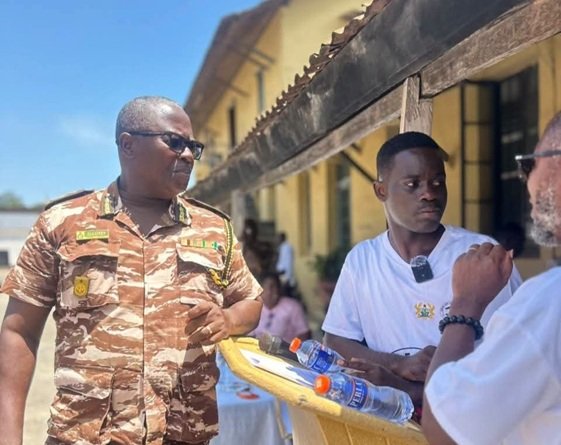
The Officer-in-Charge of Sekondi Central Prison, DDP Abraham N. Allotey, expressed appreciation to the Commission for its continued engagement and called for more frequent visits to ensure inmates receive the necessary legal guidance and support.

As part of the visit, the team undertook an exercise dubbed "Intake of Complaints from Inmates," which allowed inmates to present concerns relating to their individual cases for consideration and possible legal assistance.

The exercise focused on identifying cases requiring legal intervention, including prolonged remand without trial, the need for legal representation, and assistance with appeals.

The Legal Aid Commission regularly visits Sekondi Central Prison to assist inmates with legal issues.

Read at Ghanaian Times →
Ghana · Regulation

Parliamentary hearing questions control of assembly-owned public toilets

Parliamentary hearing questions control of assembly-owned public toilets

At a parliamentary sanitation committee hearing in Takoradi, the committee chair criticised alleged takeovers of assembly-built public toilets by chiefs, highlighting concerns in Jomoro. He described the alleged conduct as unlawful and said those controlling the facilities were refusing to account to the assembly. The issue raises questions about authority to manage public assets and accountability for revenue collected from them. The chair’s statement is not a judicial determination, and any advice would require examination of ownership records, management arrangements and the applicable local-government framework.

Search Watch live Home News Politics Business Sports Entertainment Opinion Videos More Chiefs hijacking public toilets unlawful - Sanitation Committee Chair The Chairman of the Parliamentary Select Committee on Sanitation and Water Resources, Oti Kwabena Bless John has condemned the alleged takeover of public toilets by some chiefs in Municipalities and Metropolitan Assemblies.

Copy link Add 3News as your preferred source on Google Preferred source Article tools Ask AI Listen to this article AI narration Playback position 0:00 3:15 10 10 Playback speed 1× The Chairman of the Parliamentary Select Committee on Sanitation and Water Resources, Oti Kwabena Bless John has condemned the alleged takeover of public toilets by some chiefs in Municipalities and Metropolitan Assemblies.

Speaking to the media after a public hearing in Takoradi on Friday, October 16, the MP for Nkwanta North commended Metropolitan, Municipal and District Chief Executives (MMDCEs) in the Western Region for their financial ingenuity in sanitation financing.

He said the hearing examined how Metropolitan, Municipal and District Assemblies (MMDAs) are utilising the percentage of the District Assemblies Common Fund (DACF) allocated to sanitation.

"I am impressed with all the presentations and the performance of the MMDCEs. I am impressed," he said.

"But there is still a lot more to do. There is more room for improvement."

The Committee Chairman singled out Jomoro as a major concern, revealing that public toilets constructed by the district assembly have allegedly been taken over by chiefs who are refusing to account to the assembly.

"I think that is unlawful because this is government money, the poor taxpayers' money, and the assemblies generate a lot of income, their revenue from the public toilets," he said.

He questioned how chiefs, who are supposed to be major stakeholders of the assemblies, could take over government projects, make money from them without accountability, and pay nothing to the assemblies.

"I think that is unacceptable," he said. Oti Kwabena Bless John called on the chiefs and people of Jomoro, as well as the three Nzema municipal and district assemblies, to step up and correct the situation.

"The chiefs should begin to either return or hand over the public toilets to the district assembly, to engage other private capable individuals to manage, account and pay the appropriate amount of money to the assembly to run other activities in the district," he said.

He warned that the issue would be taken up at the highest level, saying he would meet the Local Government Minister because the Assemblies fall under his purview.

"This issue is going to be taken on board. I am going to meet the Local Government Minister on this issue. It is unacceptable," he said.

The Committee, he added, is of the view that toilet facilities should be handed over to the assemblies.

"As a committee, we sense that the toilet project facilities should be handed over to the assemblies. I think these are the only issues. As the chairman of the committee, I think it is very important and an urgent need that we attend to it and deal with the issues," he said.

The public hearing formed part of the Committee's oversight mandate to assess sanitation financing at the local level and ensure that DACF allocations for sanitation are used transparently and effectively.

#5 Presidential Drive, Adesa We, Kanda, Greater Accra. Ghana

Read at 3News →